


AVs are not inevitable, but change is. How do we want it?
Every time I don’t think I need more discussion about AVs, I remember this technology is so nascent and so malleable that the more people connect and engage about reality in reality, the better off we’ll all be in decades’ time. This year alone I’ve been to three different fora in three different formats with three different sets of expectations for and from participants, and each has increased my ability to engage meaningfully with this complicated topic. I wish it were as simple as waving a wand and replacing vehicles at the optimal level with their AV counterparts, but instead the reality is much more complicated, as it always is. AVs may be a special new technology, but remember the mode is not new, and geometry does not change whether the car is driven by a human or by algorithm + radar.
A car is a car is a car after all.
Below is a summary of the above video with all the thoughtful commentary I didn’t feel appropriate to interject as an audience member.
Special thanks to the Parking Reform Network, which relies on donations from people like me (and you) to sustain its fight against minimum parking requirements and to continue to educate anyone it can about a new way to see a less-car future. I sustain my membership as a tax-deductible way to tell PRN that I believe in the work. No amount is too small!
Current State of Autonomous Vehicles: Hype vs. Reality
Tony Jordan
Thank you, everybody, and thanks, panelists, for being here. We’re trying to find the missing middle of the AV discussion and cut into what’s going on in our streets, leaving everyone with ideas around policies we can promote in our communities. Let’s start with a quick intro from Rachel and Miriam, and then Andrew will kick us off with an overview of where we are right now in the autonomous vehicle world.
Rachel Weinberger
Paula’s introduction was sufficient for the conversation. I’ve participated in a few conversations on autonomous vehicles, and my favorite thing to do is solve problems or at least suggest solutions to them.
Miriam Pinski
I want to quickly highlight a report my co-authors and I came out with through Urbanism Next looking at the landscape of regulations for different new shared mobility types, including AVs, and seeing how those regulatory regimes differ by mode. It’s also been interesting to watch AVs mature in the context of work I’ve done on the history of driver’s license policy and early auto regulations, seeing how that policy trajectory maps or doesn’t map.
Andrew Miller
While I talk a lot about automated driving, my real interest is innovative mobility: how we move people and goods today and how we might do it in the coming decades.
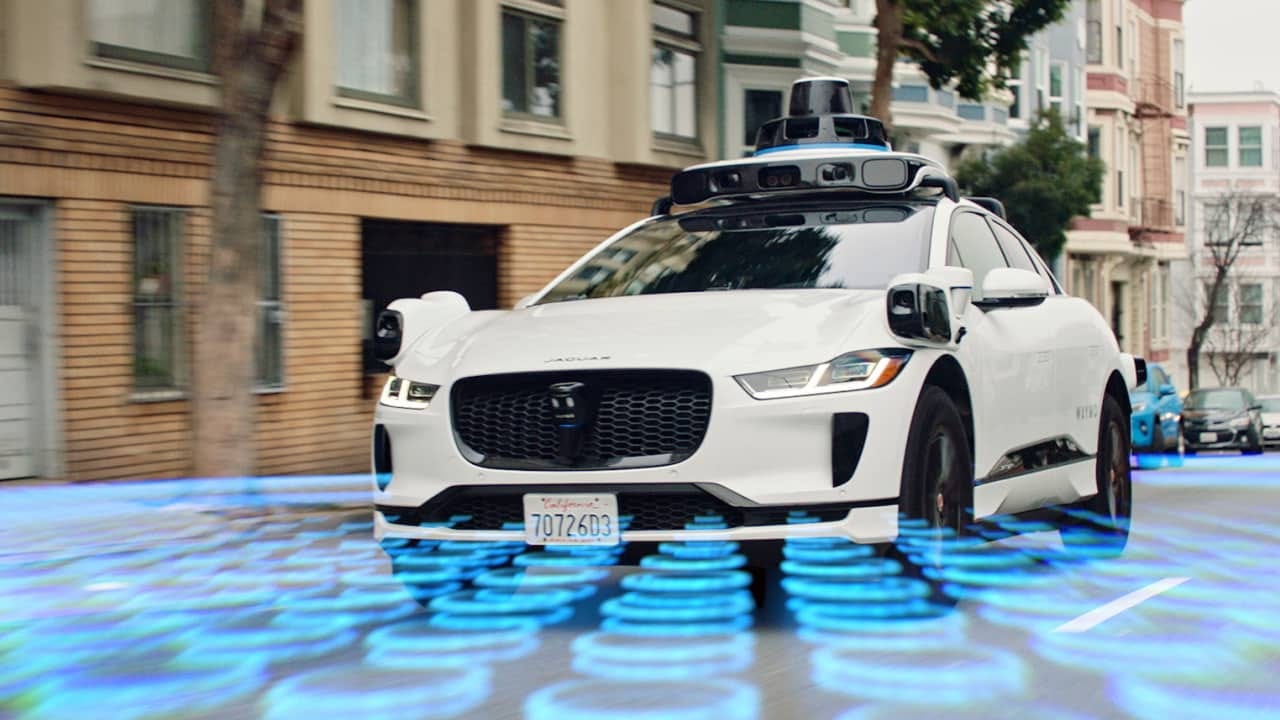
The first thing to understand about automated vehicles is that if you think they’re fake or a con, I wouldn’t blame you, because people talked so much nonsense about this technology from roughly 2005 to 2020 and poisoned the well. Many people think it’s still a dodge or a cheat, but it’s real. You can get a Waymo today—40% of the ride-hail trips being taken in San Francisco are being accommodated by Waymo. It’s across California, the US Sunbelt, and expanding to Japan, London, Germany, the Netherlands, Spain, and Portugal.
To be fair, I don’t think this argument lands particularly well. I don’t think people who do work anywhere near this technology think AVs are fake per se, but rather seen as a solution in search of a problem. Let’s not let the tech tail wag the dog. More below.
The question is not “Is this technology real?”—it is. The question is: can we keep it out of our cities? Maybe in the near term, but not in the long term. As an urban leader, you shouldn’t be thinking about how to get rid of this, but rather: if it’s coming, how do we get the best deal for our cities now? You have the most leverage right now when companies really want to enter. The smart play is to think about how automated driving can make our cities better and proceed on that basis immediately.
Assuming the inevitability of the technology and its adoption is a slick industry talking point. But because AVs are a newish technology and not a new mode, their eventual adoption in whatever shape they take in cities is not necessary for successful urbanism. The use case in rural and exurban locations does not match the revenue case. I remain skeptical about their inevitability as long as we’re not talking about the heat death of the Universe.
Private Ownership vs. Shared Mobility Models
Tony Jordan
There are two main paths we can take as a society on autonomous vehicles: a private ownership model and a shared mobility model. Which is more likely, and what factors lead to one over the other? What does each feature mean for our cities?
Andrew Miller
Driving automation is going to come for the privately owned car, but it’s also going to come for ride-hail. There is no world in which self-driving doesn’t lead to much more congestion—that’s just going to happen.
I don’t agree here. There is a world where self-driving doesn’t lead to more congestion if we pair it with thoughtful TDM and meaningful mode shift.
Everything you don’t like about the personal car, the privately owned AV is that on steroids. It will make everything worse. The externalities of the privately owned self-driving car are immense. The externalities of the robotaxi are much less. If everyone knows they can get a cheap, safe ride-hail ride in three minutes, coupled with good policy, we can encourage people to own fewer cars and rely more on a robotaxi fleet.
We only get that if we make policy improvements to let robotaxis in on our terms. If we do nothing, robotaxis won’t be commercially viable, but privately owned personal AVs will be everywhere. That’s a future to avoid, and we should be proactive to avoid it.
There’s the tricky problem of scale here. We don’t currently have the necessary available resources or manufacturing capabilities; costs continue to balloon and oscillate around supply chain bloat and uncertainty; and getting to 350 million vehicles from …~5000 is going to take decades left unplanned. Material conditions will change. Populations and corresponding densities will grow and shift, and we may have a very different climate reality before we scale this technology the way Andrew assumes.
Rachel Weinberger
We’re going to get both. Most people use their automobile as an extension of their closets, and there’s a huge amount of convenience when your car is right there.
In a research project a few years back, Joan Walker [et al.] at UC Berkeley tried to emulate AVs by supplying people with a car and a driver. Because participants had a driver, people vastly increased their VMT.
What cities need to do is the same thing they’ve needed to do for many years around conventional automobiles: minimize the need for them. The more your city is walkable, micromobility-friendly, and transit-accessible, the less you rely on individual vehicles. As cities continue pushing livable street agendas, autonomous vehicles can serve the occasional need for a private automobile.
Miriam Pinski
A free chauffeured trip will be much more enticing than a paid trip, which is why pricing AVs is critical. The externalities that AVs impose are similar to the ones human-driven cars pose. If we’re going to tax these externalities to limit them, we shouldn’t do that solely with AVs. The safety benefits of AVs are huge—as a cyclist, I would much prefer a street lined with AVs in traffic over speeding, reckless human drivers.
The safety benefits are huge, but on a per trillion VMT scale, they’re minimal. AVs are undoubtedly safer than human-driven vehicles given the same material conditions; reaction times are near instantaneous, and AVs don’t get distracted. But Phil Koopman has worked toward building a robust safety case framework to certify AVs as “safe,” when we know they also can’t think or react as humans do to unknown stimuli.
Rachel Weinberger
We can put a check on auto highway infrastructure expansion by using the leverage of what’s expected with autonomous vehicles. Because they need less space to drive, you could make narrower lanes or half-size vehicles. Anytime someone wants to widen a highway in your area, the answer should be: in 20 years when everything is autonomous, we won’t need a wider road; we can restripe this one and get additional capacity that way.
Andrew Miller
People are already using that argument to make sure we don’t invest in public transit. If the other side is going to use it that way, then we should use it that way too.
An outstanding insight from Rachel here. We must be imaginative with the one resource we can’t get more of (theoretically)—footprint. The question becomes second-order: given the condition that AVs need less footprint per VMT, how do we imagine the future of that space for other uses and not simply fall prey to Jevons Paradox? “Must” is a strong indicator here, but we must be proactive about future land use before it shoulder-checks too hard against inertia.
Evaluating VMT Models, Traffic Realities, and Deadheading
Tony Jordan
What do VMT and cruising congestion studies actually say, and what are their assumptions? How do we balance potential additional trips against land-use levers that can reduce overall trips?
Miriam Pinski
Modeling results depend entirely on your assumptions. Different policies build off each other—you can’t isolate the effect of unbundling parking if you’re also pricing driving.
As a transportation enthusiast, my tendency is to want to encourage people to take trips. There seems to be a strain in these discussions around limiting VMT that discounts that a lot of people could probably use more mobility. How do we encourage the most efficient use of roads while still supporting trip-making?
There’s a counterintuitive notion here about congestion and its relationship to trip-taking: congestion is actually a solid economic indicator that a place is desirable to travel from, to, and through. “Congestion” is not the problem worth solving; what we’re looking to model here is predictability and distribution of benefits, which will likely have some causal relationship with AV adoption and trip-making. One of the many AV threads left to pull—but until we have enough of a sample size, ironically, we’re going to have to listen to some pretty grandiose assumptions from people who are tech boosters or their counter Luddites. Caveat emptor.
Rachel Weinberger
We need to unpack the mobility question from the accessibility question. Some people could and should have access to more opportunities and activities.
Academically correct, but practically a headache. I’ve given up trying to bore people with the distinction in my more casual conversations. See also: safety vs. security.
There is no analysis that shows autonomous vehicles lead to reductions in VMT if they are one-for-one replacements for people’s cars. Uber and Lyft added congestion to dense urban centers. Taxis and TNCs tend to be empty 40% of their driving time, which is a lot of waste unless we have much greater efficiency in usage. The simple answer is to reduce our reliance on private auto mobility.
Tony Jordan
When we talk about deadheading, there’s a whole slew of driving that occurs on a daily basis from private human operators. How do we unpack that so people understand where the real current problem lies?
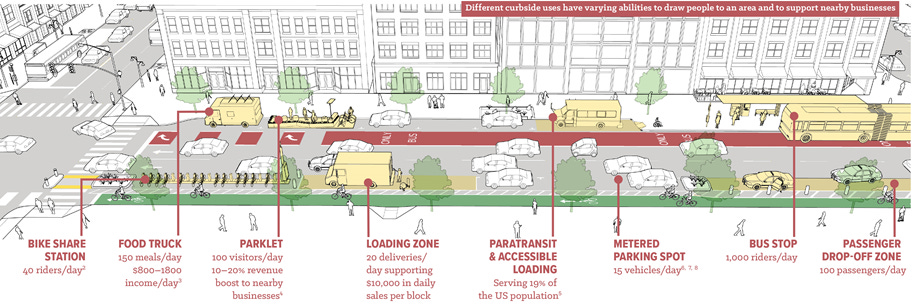
Deadheading—trips with no passengers—is going to be a big sticking point for integration into places with high demand and limited capacity (cities). Why should everyone be foisted upon the choice between free storage for a car that sits empty ~95% of the time and free-flowing traffic (not congestion, but also congestion) where there is no person or thing moved until the next call-up? Why is that better? We cannot have curb management discussions in a vacuum.
Miriam Pinski
Look at school drop-off or pick-up lines. Rather than a parent dropping off a kid and waiting in line or driving back home, an AV could pick up another child or perform another trip. There’s a benefit there of a more socially beneficial trip being made. Many parents would also feel a lot safer having their kids bike to school if the other cars were Waymos.
This amounts to wishcasting. I don’t see a future where there’s a cadre of children—pre-prefrontal cortex formed—being whisked off in AVs without deep parental guidance, and at that point, if the parent has to watch the vehicle like a hawk and has no recourse in case of an edge case incident, what benefit does it have? In cities where public transit (should be) plentiful, why would a teen get into one of these expensive vehicles when the bus exists? Cause other people are icky? No thanks.
Rachel Weinberger
Taking a kid to school and deadheading home is very akin to an airport trip. We’ve developed lifestyles around automobility that we might want to rethink, such as kids not going to neighborhood schools.
Should have waited two sentences.
Policy Levers: Road Pricing, Shared Compartments, and Local Rules
Andrew Miller
What we need more than anything is road pricing. It’s the only tool we have to fight congestion. With AVs, you can scale the price based on the number of people in the car: as occupancy goes up, the cost goes down. If there’s no one in the car and it’s deadheading, the charge is much higher. That will force robotaxi companies to minimize empty miles driven.
Andrew’s been a hawk on this idea, and he’s been right since he first started advocating for it. Road pricing is the one tool we’ll have once the gas tax careens into the toilet as cars simultaneously shift electric.
Additionally, Americans loathe shared trips with strangers. You can imagine a shuttle bus with four separate compartments—a shared vehicle where you don’t have to interact with another person. Cities should set conditions for AV deployment:
Require fleets to serve transit deserts.
Require a proportion of the fleet to be wheelchair accessible.
Require a proportion of the fleet to be shared vehicles.
If you do not ask for these conditions, you will not get them.
Two things: Americans have revealed preference that they would rather drive alone than share a trip with a stranger, but this is a limited loathing. Price is the great equalizer here: make a trip cheap enough (see: UberShare or Lyft Share) and some price-sensitive (elastic) travelers will make those trips with others. I also agree that manufacturers might customize their vehicles to meet a demand, but endless customization drives costs up and resale down.
Second thing re: conditions. This is absolutely correct, and cities should wield, as Meera Joshi puts it, the great landlord power (of streets) it has to demand that AV-share or robotaxi companies contribute benefits to taxpayers at the same scale as it extracts revenues.
Miriam Pinski
Instead of government forcing specific features, let the market provide. An impediment is often the restrictions we put onto innovative vehicles.
The promise of AVs is that we can program them never to speed again or to prevent idling at the curb and avoid blocking cyclists. Local governments can think through how to manage curb space with machines that obey programming. Local government makes sense for curb management; federal authorities should handle vehicle safety standards and data reporting, and states should manage liability.
I wholly disagree with this point. Miriam assumes perfect information and reasonable Nash bargaining from the players in this negotiation. Enter: capitalism. The “market” can provide guidance on customer acquisition and specific KPIs, but in no way do I trust a private business to put public benefit first—and nor should it. That’s what policy levers are for. If I could reframe, government builds and reinforces hard edges and clear expectations, as it does in every other industry, and then let the firms compete for business.
Also: we can program them never to speed again, but is that the goal? What if the vehicle needs to break the posted and enforced speed limit to avoid a crash? How do we define “idling?” How long can a robotaxi wait at the curb for its passenger board/alightment before it’s idling?
I’m being a stickler here, but my larger take is that we have to be much more precise with word choice and defining a particular policy objective before we make any decisions. Clearly we’re not there yet.
Rachel Weinberger
Policy must flow from identifying what problem we are trying to solve. AV companies are trying to solve how to make the most money.
Congestion pricing works well where there’s a strong center. In places with viable alternatives, space allocation matters just as much. We should privilege emergency vehicles, transit, and delivery, while creating bike networks and frequent transit options.
This is the thesis of this whole blog: what problem are we trying to solve? Name me a stakeholder, and I’ll name the game of telephone we’re playing trying to agree on any problem. If I were a city AV policy manager, I would try to align city policy with AV companies’ goals as much as possible: open hostility should be the escalation heel turn, not the opening gambit.
How can the city make the most money AND how can the city provide the real estate to move people safely, affordably, etc.? We don’t have to dismiss capital’s goals, but we shouldn’t accept their framing without running ideas into the ground to identify problems.
Andrew Miller
What cities should want out of driving automation is a change in where vehicles are stored. In an automated world, every location no longer needs an adjacent spot to store vehicles. Cities can reduce parking footprints and move storage into tighter, denser, smaller areas.
Oh, hi Parking Reform Network.
Miriam Pinski
That’s another way to discourage private AV ownership: if you make it expensive to park downtown because there’s less supply, that encourages more trips through shared AVs rather than private ones.
Advocacy & Actionable Advice
Tony Jordan
What is one actionable piece of advice advocates can use right now to move their communities toward better outcomes?
Miriam Pinski
Encourage skeptics—especially older adults with mobility limitations—to try a robotaxi ride to experience the accessibility benefits firsthand.
Once we reclaim a parking spot or street space from private vehicles, immediately fill it with another active use (like outdoor dining or wider sidewalks) rather than letting it become another car lane.
Two great points from Miriam here that can help us reframe one of Andrew’s original points: burying our heads in the sand to ignore or to know less about technology is not a counter to overwhelming change. People should know what they’re mad about. Second, I couldn’t agree more about tactical, adaptive reuse of public space. Let the public see a future different than the one they expect, and we can convert a lot of skeptics and also shut down a lot of toxic arguments.
Andrew Miller
Push for road pricing. Gas taxes will not fund roads indefinitely, and road pricing is the single best tool to fight congestion. Because AV telemetry makes dynamic tracking straightforward, start by pricing self-driving cars, establishing the framework that can eventually be expanded to all vehicles.
Rachel Weinberger
Keep changing the conversation around car use. Continue pushing for incremental, structural improvements like protected bike lanes, unbundled parking, and dedicated transit corridors.
How do you feel about AVs? Let us know in the comments below, and again, thanks for reading.