


Key Takeways
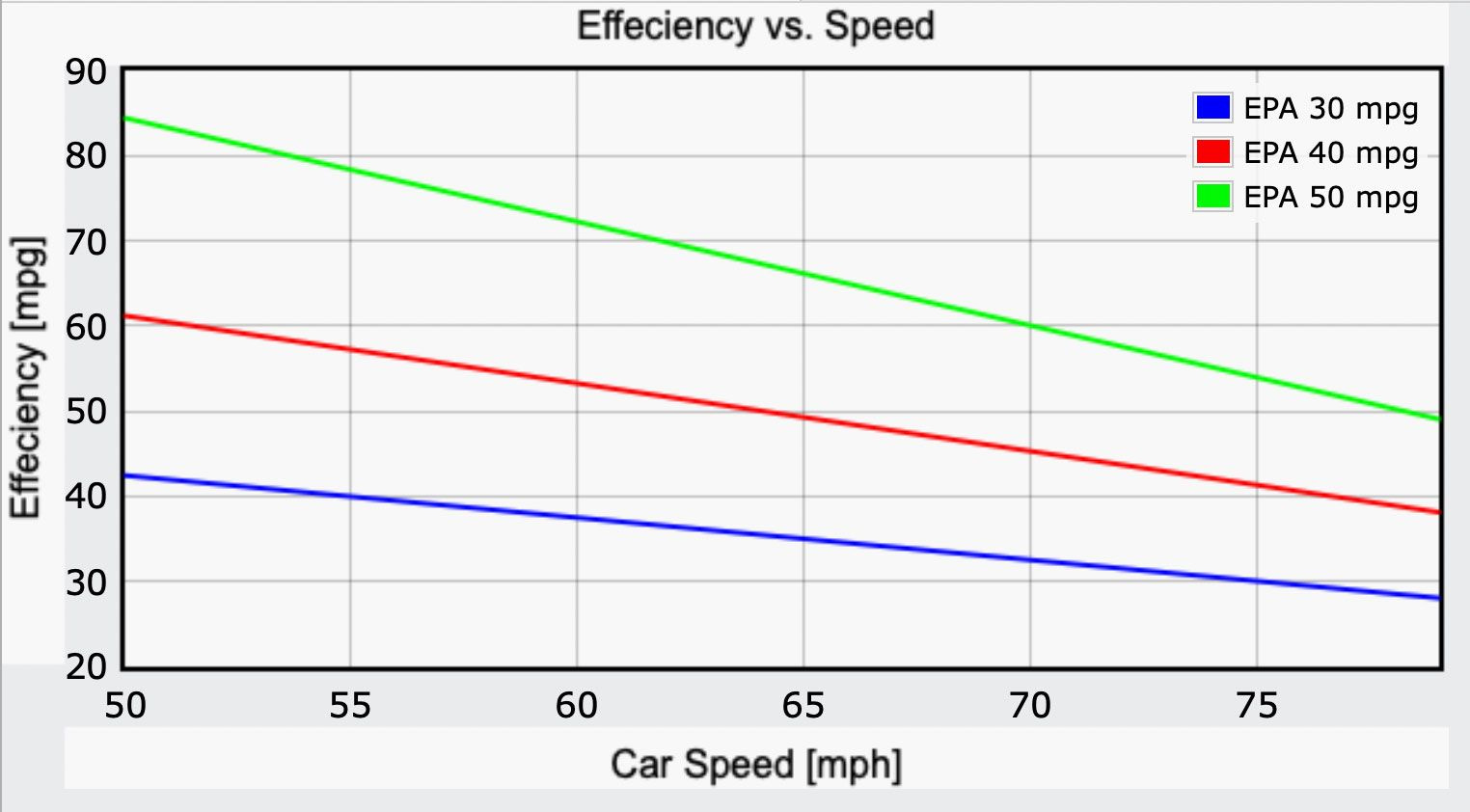
Driving slower saves fuel as well as lives, with every 5 mph over 50 mph adding meaningfully to fuel costs.
Speed limits have five dimensions: designed, posted, observed, caught, and fatal. Effective policy must address all of them.
The 1970s precedent shows that crisis-era speed reductions can prove surprisingly durable, lasting decades beyond the original trigger.
A crisis can create a rare platform for change, but only if public opinion has reached the threshold where unpopular measures feel necessary. Has this crisis reached that point for lower speeds?
Local democratic legitimacy matters: speed limit changes imposed from above are less likely to stick than those driven by communities themselves.
Political capital is finite; governments should weigh whether speed limits are the best use of it compared to higher-impact transport reforms.
The case for lower speeds is not really in dispute; the debate is about timing, process, and strategy.
Next Steps
Should lower speeds be part of your response to the current oil crisis?
Introduction
When the oil crisis hit in the 1970s, governments reached for lower speed limits. It worked then, but does that playbook still apply today?
In this week’s blog, we’re back again to go head-to-head on whether reducing speed limits should be part of our response to the current oil crisis. I make the case for slowing down, arguing it saves both lives and fuel. Russell pushes back, questioning whether now is really the right moment to act.
For (Sam)
I’d argue this is relatively non-controversial. Generally, we should seek to lower speeds on neighborhood roads. There is an exponential and inverse elastic relationship between an increase in speed and the likelihood that a crash becomes deadly. I will always be in favor of safety over speed. That said, this argument is meant to argue for lower speeds in response to the ongoing oil crisis (which is still ongoing a month later, and shows no sign of stopping anytime soon). The direct argument here is that encouraging slower driving not only saves lives it also saves gas: the US Department of Energy, to the extent it can be trusted as a truthful institution, says the following.
“It can be assumed that each 5 mph driven over 50 mph is like paying an additional $0.27 per gallon for gas.” Why? Reduction in aerodynamic drag (the faster you drive, the harder it is to overcome pesky air resistance). Smoother, gradual acceleration and deceleration often save more gas than driving faster in the long run. It is more energy-consuming to rev an engine up to higher RPMs and sustain this level of acceleration as conditions change. Hitting the brakes has a similar, if not inverse, effect. Of course, this oversimplified analysis depends on road conditions, the age, make, and model of the vehicle, its weight, and its fuel-injection type. Generally speaking, encouraging slower speeds can help conserve petrol. This is true during “normal” times, too.
The next thought here is, how do we encourage drivers to slow down? In my practice, I preach the five different types of speed limits: design, posted, observed, caught, and dead. If the road is designed—and traffic engineers know how to design a road to encourage slower or faster driving—for a certain speed limit, a posted speed limit will have an effect insofar as people willingly follow a posted speed limit. The delta there is the observed speed limit: how fast are people actually driving, regardless of what speed the road was designed for or what the law says.
The next two are more social and less technical: the speed at which you get caught and the speed at which you die. Planners love to talk about the three Es: engineering, education, and enforcement; all three have different standards depending on cultural norms and the fairness of policing in certain communities. I don’t think I really have to spell this out, but we don’t necessarily have a perfectly optimal or responsive system to perpetual speeders who live in one neighborhood over another. Lastly, the speed at which you die is tied to the relationship between speed, safe braking distance, and the age/ability of the persons affected. This is a land use question and one worth answering—should we change the geometry of the built environment to encourage slow speeds? Land use is often tied directly to the designed speed limit. Wider lanes and wider roads naturally take up more land that could be dedicated to development or open space. So, slower speeds solve many problems at once and should be a central policy and design focus to manage the ongoing oil crisis.
Against (Russell)
Conclusion
We agree on more than it might first appear. Slower speeds are safer, better for the environment, and, as the current crisis makes plain, better for fuel efficiency too. The real disagreement is one of timing, democratic process, and political strategy.
My case is grounded in the evidence: the relationship between speed and safety is well established, and an oil crisis provides a rare moment of public receptiveness to change. Russell’s counterpoint is a pragmatic one, that poorly timed or top-down interventions risk backlash, eroding the very public support that lasting reform requires.
Perhaps the most honest conclusion is that both can be right. The case for lower speeds is strong; the question of when and how to implement them is where good policymakers must exercise judgment. If the current crisis deepens, the window for bolder action may open. Until then, the debate Russell and I have laid out here is exactly the kind of thinking our cities and communities need more of.
So glad for this conversation, I showed some love for this piece in my Substack post this morning - https://davetheplanet.substack.com/p/rational-response-to-oil-crisis-mia
What is the source of the speed/efficiency chart?