


Last week, Berkeley’s City Council voted to remove parking minimums from its zoning code, 9-0. This doesn’t mean that there won’t be parking at all attached to new developments; it does mean that parking will no longer be required. It’s a landmark decision for a city (in a state) that’s been lambasted for years for stymieing progressive planning policy in the primordial soup of progressivism, sort of.
(Sidebar, real quick, is this amazing take on the incoherent Bay Area Progressivism from Zelda Bronstein in Dissent: “The paradox begins to disappear once you recognize that the city’s famous grassroots activism is mostly history.”)

I’m for this. I think that zoning is more violent than not toward ideological and/or market-driven planning and the well-being of people’s ability to secure a place to live. I just don’t think parking maximums are the answer. Reddit tells me I’m wrong.

I’m not.
Two Minutes in Berkeley, California
Berkeley, California was once known for its public university, its hippie politics, and lots and lots of single-family bungalows. It’s medium density—about 11,500 residents/square mile (compared to San Francisco at 18,800, or New York City at 27,000). It seems important to note that if Berkeley had the same land area as San Francisco, the density would drop to just over 2,500.
You’d think with the housing crunch (more on that in a bit) that the citizens of Berkeley, or at least those with the power to summon more housing from the dirt, would be itching, or at least not so adamantly against lots of new housing. There’s room to grow, at least to match the area density, if not to lead on becoming a new focal point for urban development. This is not the case. Berkeley, it would seem from the reams of anti-development literature available, is as anti-housing as they come, even with prices skyrocketing and and a not-unrelated surge in the unhoused population and people who sleep rough day to day. Of course there are advocates pushing to build new housing. They’re often treated as interlopers or developer-shills.
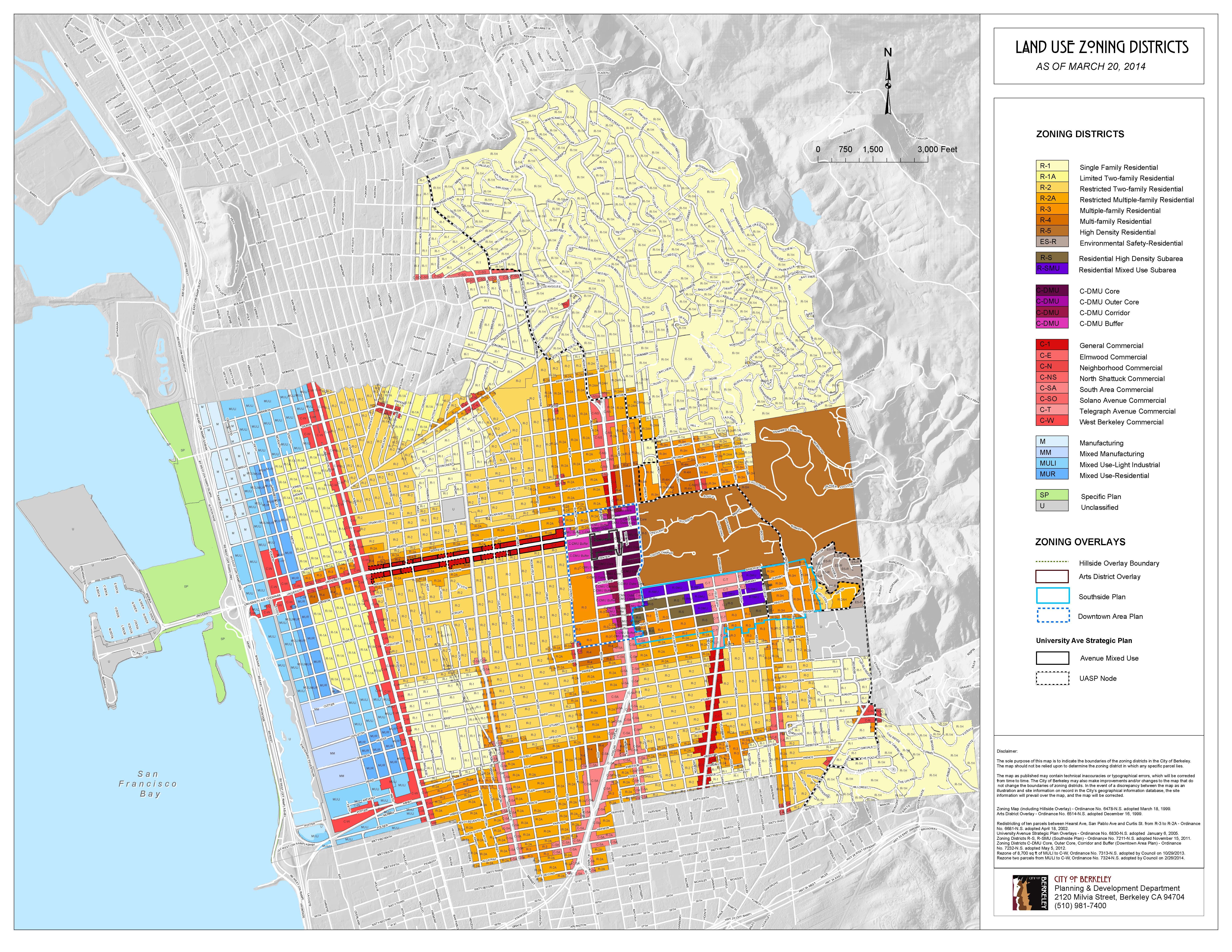
The City of Berkeley is still known for its public university, consistently ranked best in the world by the rankings of record. The University of California, Berkeley (or Cal as it’s affectionately known) is highly selective and its student population comes to represent the body politic local to Berkeley, by virtue of they themselves becoming residents. Lots of these students, after moving out of the dorms, move into group-living situations in the bungalows nearby.
The hippies have become NIMBYs, though, in a fit of irony, where the left leaning “be yourself” morphs into “be yourself, but not like that.” The monomania to preserve—doesn’t matter, a “way of life,” single-family homes, fresh fruits—has poisoned the Left Coast for decades, ever since the hippies discovered money.
Not In My Backyard. That’s NIMBY to you.
Sasha Perigo, writing for CurbedSF, unpacks the quixotic campaign to maintain the status quo in Northern California in the face of a housing crisis (Neither Kirsch nor Gorska thinks the Bay Area is experiencing a housing crisis, quotes the piece). Her piece called “Who are the Bay Area’s NIMBYs—and what do they want?” covers mostly Marin County and Cupertino/San Jose, but the message remains clear: those who want to build more housing or transit or change anything must be stopped at all costs.
Here are some choice chunks from this excellent primer:
Marin County-based activist and founder of Livable California Susan Kirsch sees no problem with the NIMBY moniker.
“It’s about people being stewards of what they love and care about,” Kirsch told City Lab in July. “It’s care-giving, not excluding care for others.”
Do you see the non-specific “people” and “others” in this quote? What about the moniker Kirsch’s group uses—Livable California?
“What we don’t want in our backyards—or yours, for that matter—is more gridlock, crowded schools, an overtaxed infrastructure and ecosystem,” says Better Cupertino officer Caryl Gorska, though she makes it clear she’s only speaking for herself. “I really want to eradicate this idea that all growth is good, or even inevitable.”
A false dichotomy—claiming that building more housing and transit service necessarily creates more gridlock, schools, etc. Important to note that the same folks—including the “progressive” Sierra Club—who push for “saving the ecosystem” often pop up in the anti-development discussions. Their claim that more building would irreparably damage the ecosystem runs counterfactual to the absolute necessity to drive everywhere.
Also—who is “we?”
MAD [Marin Against Density] member Bob Silvestri told the Marin Independent Journal in 2014 that Plan Bay Area was a transit-oriented, high-density development plan that simply didn’t fit in Marin County.
“Larkspur will never be a transit neighborhood,” claimed Silvestri.
Why? Because he said so?
A 100 percent affordable housing project in Moss Beach has now been delayed for four years and 50 community meetings, in part due to efforts from a group called Resist Density.
The list goes on—and on—and amounts to thousands of proposed homes delayed or denied in the suburbs. It’s impossible to estimate how many homes were never proposed in the first place due to community opposition or Levine’s legislation.
It’s important to note that “local control” these groups mention as the mechanism for sensible solutions might fall under the letter of the law—the Supreme Court has affirmed over and over the need for land use to be a local issue—but what those who want local control really mean is “my control.”
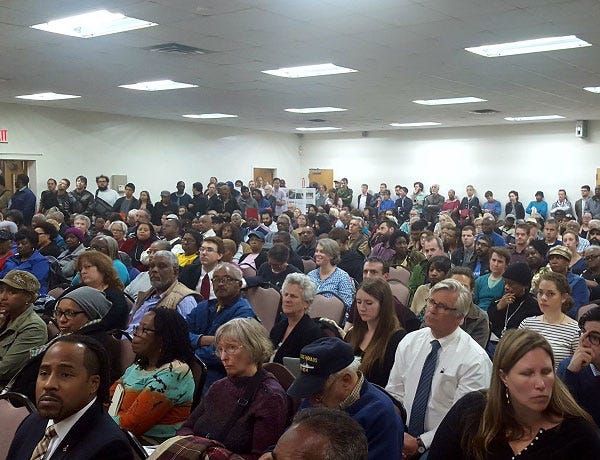
Let’s not be fooled by bad-faith actors who “want to do what’s best for our communities,” right? Thousands of people suffer for want of a place to live at the whim of “community opposition.” Not great.
Housing activists criticized Palo Alto councilwoman Lydia Kou after she tweeted a denial of a housing shortage, saying, “There’s plenty of housing, you just need a superb realtor, like me.”
Translation: there’s plenty of housing if you’re marginally wealthy and you’re willing to suffer fools and pay me money to get it for you.
“People pretend communities have always existed the way they exist today,” says Bauters. “The reality is that there are a lot of discriminatory policies that helped shape their whole communities.”
It would seem willful ignorance of factors that built these communities now front as bully-progressives, with names like “Livable California” and “Larkspur Fights Back.” Tell me, Man of La Mancha, what exactly are we fighting?
Zoning Is Violent, Mostly
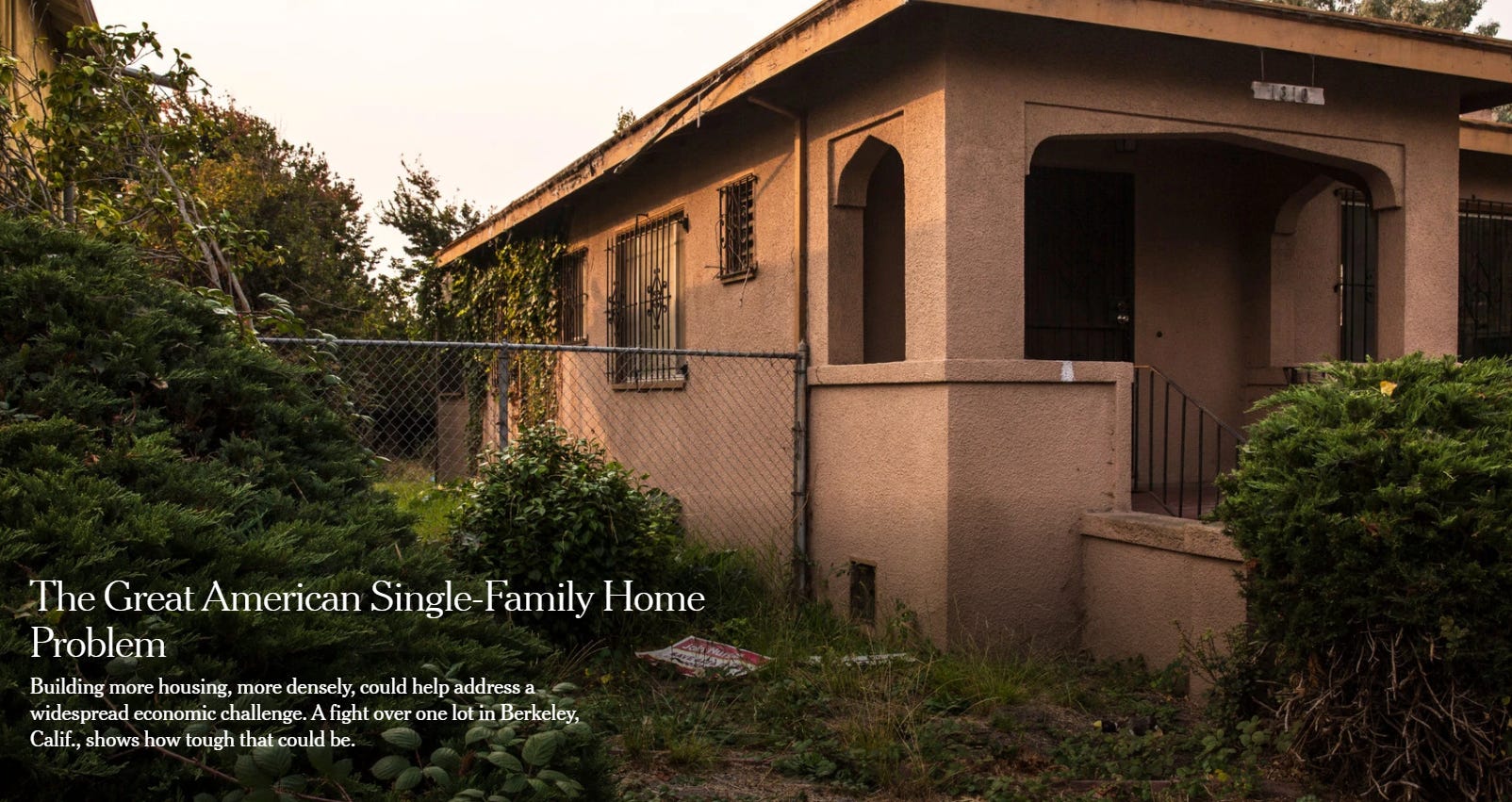
One quick veer into the world of zoning politics. For this section, I’ll lean on the inimitable Conor Dougherty’s 2017 New York Times article, “The Great American Single-Family Home Problem,” centered where else—Northern California.
(He wrote a follow up book called “Golden Gates: Fighting for Housing in America,” which I could hardly recommend more.)
Let’s focus on the crux of Dougherty’s point: the Housing Accountability Act. It’s a state law that “[…] bars cities from stopping developments that meet local zoning codes. In other words, it’s illegal for cities to ignore their own housing laws. The act is rarely invoked, however, because developers don’t want to sue cities for fear it will anger city councils and make it harder for them to gain approval for other developments.”
In practice, this is a good law to ensure local zoning isn’t totally toothless. In theory, a state-level panopticon gives watchdogs standing to sue and bad-faith actors groundswell to sink into.
In reality, it gives NIMBYs a brigade of balloons to puncture; they’ll cry about overreach (they have) about overproduction (they have). It gives those “care about local control” fodder to cry foul. Overreach! Foul! But who cares since California courts keep obviously remanding lawsuits back to local planning boards, compelling them to comply with the letter of the law.
Anti-housing activists have found a way to subvert, the letter, the intent and the spirit of the law by using an old conservative tactic: delay, obstruct and project under the auspices of thoroughness? What we don’t need is a different way to wrap up bad faith in new clothing, say, as parking maximums.
Parking is expensive to build, and it’s even more expensive to build underground or in a garage. How much more?
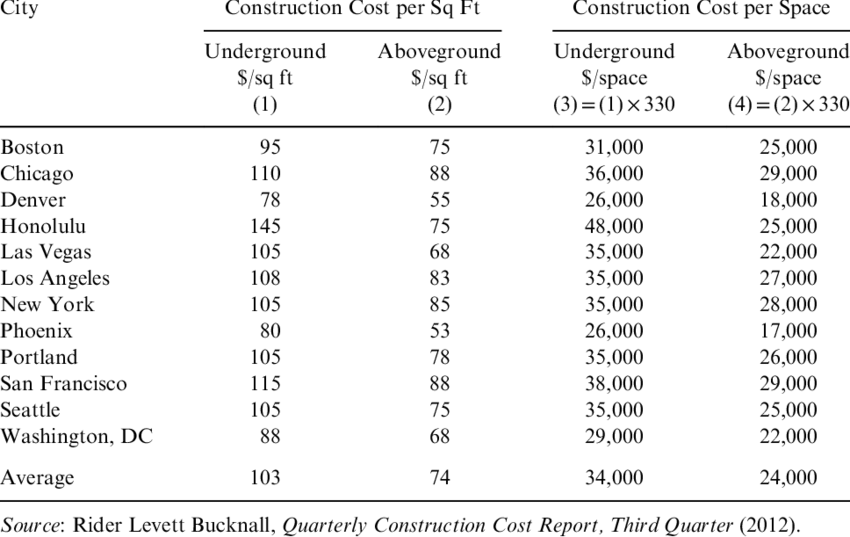
Logically, we can make some assumptions. First: without the requirement to load a project up with costs, developers will be able to build more housing, for less capital. Second: with a maximum instead of a minimum, this new policy will limit even the most car-crazed developers from building oceans of parking with archipelagos of units dotted throughout.
Third: it will make a minimum amount of difference without significant regional housing policy changes allowing for more density—bringing SF’s ring suburbs, including those in Marin County, Berkeley, and even as far away as Cupertino and San Jose, if they can even be called “suburbs”—and with more density, more transit and even less demand for driving and parking.

Just to be clear, too, those who would want to block new housing will eventually lose this fight. No matter how conservative and organized the anti-development NIMBYs are, time and population drag, and political turnover will force the issue. Housing is still a supply-and-demand curve and no matter how inelastic the demand for housing might be. California is different than other states—they’ve got an activist state senator, Scott Wiener, who’s fighting for more housing statewide; they’ve got a housing reconciliation process called RHNA, which seeks to determine how many new homes each region in California needs over an eight year horizon. A successful RHNA analysis, to me, looks like a decrease in the number of new affordable units as a percentage of total new units and a plain decrease in the number of new units needed.
But this cycle was different, thanks to SB 828, the 2018 law Senator Wiener masterminded. The law beefs up the methodology used to determine each region’s housing allocation, accounting for previous under-production of housing, as well as areas where home prices are rising faster than wages, among other considerations. The result is that the upcoming cycle’s RHNA allocations are multiple times greater than the current cycle, which spans 2014-2022. The Southern California Association of Governments’ (SCAG) housing allocation more than tripled from about 400 thousand to about 1.3 million. ABAG’s allocation merely doubled, from 187,990 homes to 441,176.
—“Bay Area Takes Step Toward Major Housing Growth,” Benjamin Schneider, SF Weekly, 1/25/2021
What’s missing from all of these state-wide plans and rules? Actual housing. These laws don’t, and likely can’t, compel localities to actually build the new homes. The rules do say, “[…] local governments must adopt plans and regulatory systems that provide opportunities for (and do not unduly constrain), housing development.” They don’t impel NIMBYs to do anything at all.
Isn’t it so frustrating that the supply curve is also inelastic? Isn’t it so frustrating that California’s local governments know how much housing they need, know the spread of affordability, know where it needs to go, and, now, in Berkeley, how much parking these units don’t need?
Good parking policy doesn’t just affect good zoning policy and good housing policy. Good parking policy is good housing policy. Good zoning policy is context-sensitive design first, without rubber stamping the number of parking spots allowed.

The oft-cited example here strays far from the Bay Area: Houston, TX, which is famous as the largest city in the United States without a Euclidean zoning policy. For all of Houston’s problems, it’s lack of a prohibitive zoning code is not its downfall. It’s the lack of a coherent strategy to compel developers build more housing more densely and significantly upgrade the region’s transit system to support it and STILL MANDATE OFFSTREET PARKING. For all its issues, the lack of zoning code doesn’t necessarily condemn Houston to decades of undoing the violence other cities must reckon with.
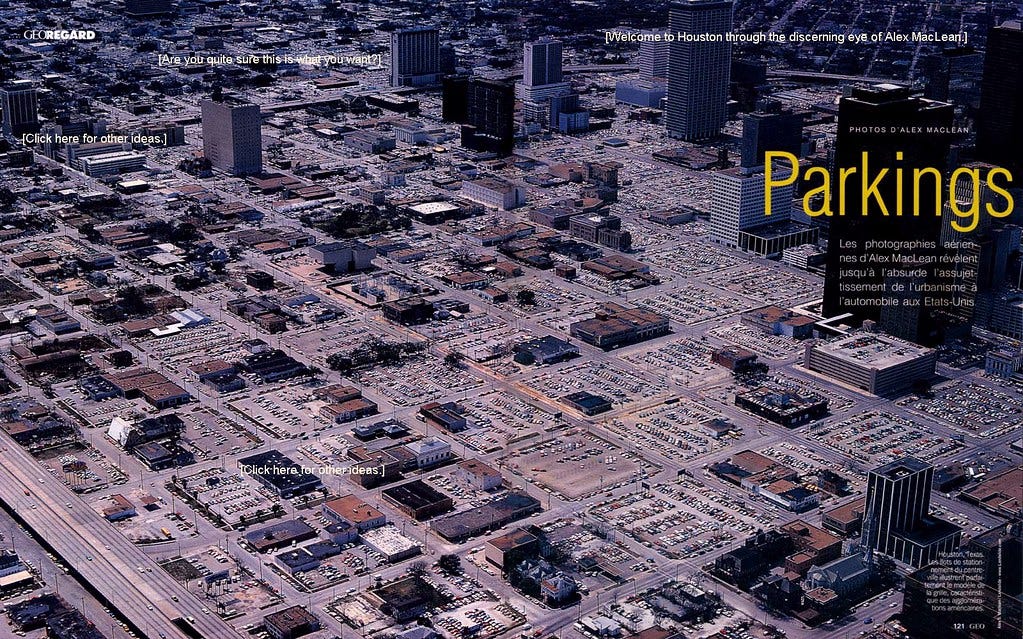
Zoning is a violent mechanism, mostly. Its original letter meant to codify the separation of noxious uses—think factories and schools—but it morphed into codified racism. It’s prevented the Bay Area from building hundreds of thousands of new units.
No units without parking minimums is still no units.
Parking Minimals
We must learn to speak about off-street parking more coherently as a society. Let’s start here:
Parking Minimums: Embedded in the zoning codes of most municipalities, parking minimums mandate how many parking spots must be built per some criteria (e.g. number of habitable rooms, total net square footage, number of barber chairs, etc.). Each locality determines this ratio based on the idea of concurrency, ensuring there’s infrastructure to meet local needs. The problem is the criteria is often based on maximum, peak capacity. Notice how many empty spots your local haberdashery has during mid-day.
Parking Maximums: Take the same analysis but determine a ceiling instead of a floor. For the few days of the year, parking might be tremendously scarce, but the outcome is worth the annoyance (benefit outweighs cost in the parlance). Note that there might always be an option to provide no parking at all. This is better policy than parking minimums because constraints necessarily force a decision that wouldn’t have otherwise existed. Constraints prelude creativity, and hopefully more units or shops than parking spots.
Both parking minimums and parking maximums are planning by fiat, which gives NIMBYs reason to Goldilocks any attempts to change these numbers, or, for that matter build anything by right. The goal is to obstruct.
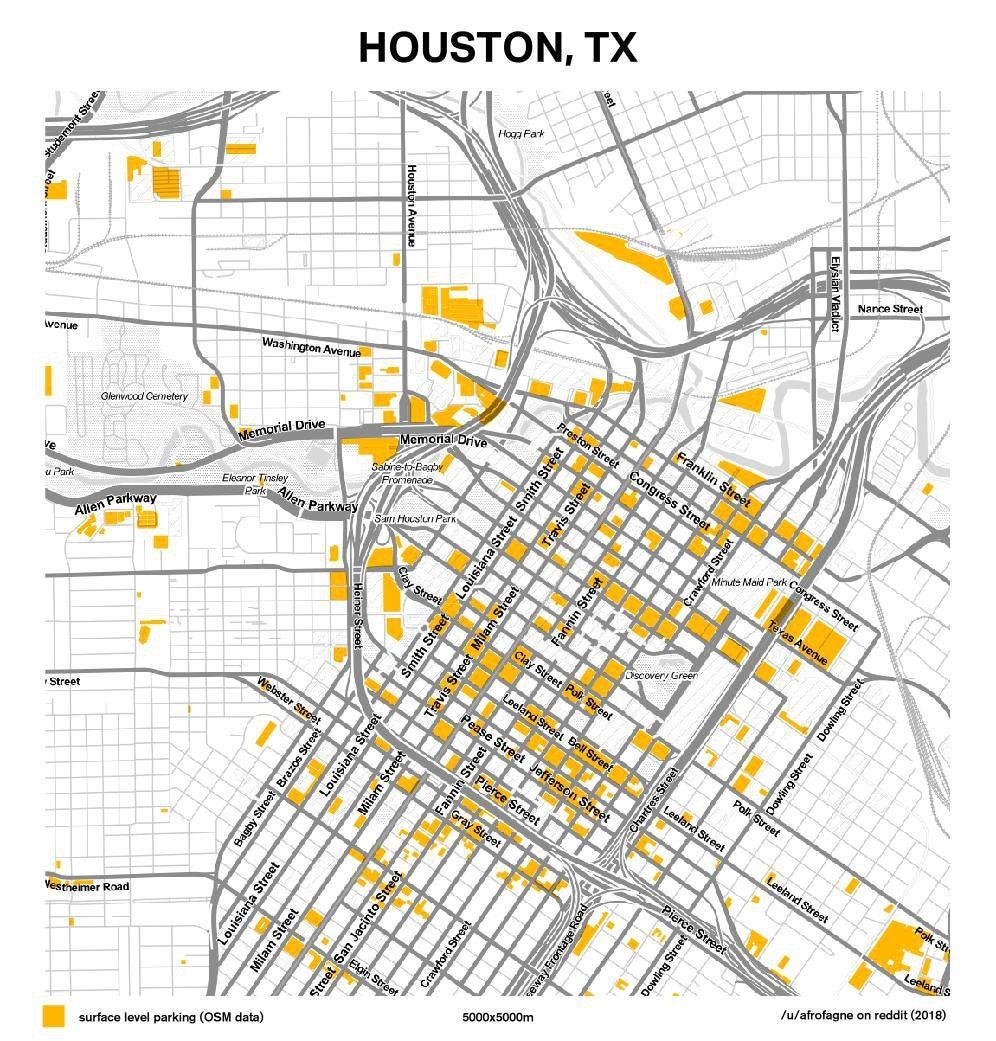
Parking Minimals, however, can exist outside the violence of zoning codes. A parking minimal is simply a determination to right-size how much parking is actually necessary for a new development, and, a tool to help remove the oceans of parking without drunkenly banging into walls. It’s a design solution. There’ll be a sandbox of allowable tools and a fantastic, easy-to-understand carrots and sticks to allow for maximum flexibility. It’ll be community driven and there’ll be no target for NIMBYs to snipe or gripe. Let’s test this idea somewhere with serious problems. Let’s start in California. (Our Houston. Or NYC.)
Nope.

Can I ask, what it means that if "Berkeley had the same land area as San Francisco, the density would drop to just over 2,500"? Do you mean if Berkeley's population were spread over a larger area its density would drop? Is that the same as saying something like "if Berkeley were three times less dense, it would be three times less dense"? I'm just trying to understand the point