


This was a fantastic conversation that’s a little delayed. Unfortunately, the problems are mostly still evergreen. Fortunately, Shin-pei is on the case.
Good afternoon. I’m with Shin-pei Tsay. I’d love for you to introduce yourself to the audience.
I am right now, the Chief Research and Data Officer, City of Boston, Executive Director of the Mayor’s Office of New Urban Mechanics and General Curiosity, and investigator, explorer of public spaces and the public realm.
That’s amazing. Can you go through your titles in a little bit more detail? Can you give some examples of some of the projects you’ve worked on, or what the expectations are?
It’s a relatively new thing for the city. We are expanding the scope and operations of the Mayor’s Office of New Urban Mechanics, which has historically been the Mayor’s Civic Innovation team. That’s a team that takes on new ideas, creates a prototype, evaluates it, and tries to embed successful ideas in departments. Historically, that team has worked a lot with data, with new technologies in the public realm. It has worked on everything from how to connect people to the Mayor’s office and the precursor to 311 to investigating what it means to be a city of play, thinking about ways of shoring up people’s trust in government, demonstrating the reasons why we’re doing something, and trying to bring people in to foster a sense of transparency and understanding. We felt it was important to connect it to the analytics side. The Mayor’s Office of New Urban Mechanics has been around for fifteen years. The analytics team has been around for ten years, and it has looked at city-generated data to inform decision-making. And bringing those two things together is our effort to support all our chief innovators around the building, starting with Mayor Wu, going through her cabinet. Lots of chiefs are doers and thinkers, wanting to do new things and supporting them in making sure that new ideas are rooted in evidence so we know we’re getting a good sense of what impact is, and that we’re still open and curious and thinking about ways that we can keep on improving.
It sounds like there’s lots of opportunity to ingest what’s happened in the past and engage with the public, private, nonprofit sectors to come up with innovative ideas to thorny, very tricky problems. As my audience will know, the problems in the urban space and the built environment are not usually one-to-one or easily definable or put into a box, if you will. It sounds like you’ve got a lot of leeway and support from the different folks across the city to do that exploration and hopefully be a model to your citizens to show good government and counterparts across the country. Does that sound accurate?
Those are all great aspirations. I would love it if people thought that this felt good, but more importantly, that they see that the government is working for them. We feel like that’s really important.
Now, you didn’t work your way up through the city of Boston, right? You haven’t been in the City of Boston your whole career. Can you talk me through the highlights of how or what it takes to become someone in your position?
I’ve worn a lot of hats. This is my first stint in city government, and I think all the different steps that I have taken were propelled by interesting questions. The first one was, as I got started in my career, an interest in how cities got shaped, what shaped cities, what were the decisions? Initially, I thought: design. I thought maybe it was community engagement in public spaces. I went into bicycle advocacy, learned a lot about how policies shape cities and how transportation decisions shape cities, and stayed there at different levels of policy. From block-by-block advocacy and campaign building, urban design, to broader national, state, and even global policy, looking at the role of climate change and the ways that we set targets in climate, and how that trickles down into what localities might do at a city level.
I was always interested in design, too, so I thought of the Dark Matter Labs that talks about the invisible things that shape us and the places around us. I always saw that the physical side of things came from those things that we can’t see, so that we experience cities in a way, and the experiences we have result from things that we may not be able to see: the policies, the governance, the funding—things that are maybe a bit more obscure to the general person. I just followed a question of curiosity.
I was at TransitCenter, a national philanthropy working in public transit. What is the role of philanthropy in making sure that we’re centering people in our public transit systems? What about foreign policy as a think tank that would do about this? And then I was at Uber for a bit. Similarly, how does a tech company think about this? Because no matter what you think of them, people have changed their behavior based on the product. I haven’t owned a car in over twenty years, largely because there are services like that that are very available these days in most places. And now with the city, it was a curiosity, what is it like inside government? I’ve always been adjacent to it. I’ve been adjacent to policy making decision makers, been in many rooms with them, and helped them and supported them, but not actually part of the government. So this was an opportunity to test that out.
I would say follow your curiosity, follow your questions, and see where it takes you.
Can you distill your first year or two in government into one thing that surprised you about working for a public agency like the City of Boston?
I was brought in to be the head of the Mayor’s Office of New Urban Mechanics. It’s known as the Civic Innovation team. A lot of thought went into this. Mayor Wu is a certain kind of mayor at a certain moment in time in history, especially for a city like Boston, the first female, first person of color, first mom mayor. It wasn’t just any city government that I was interested in. But even knowing that about her and knowing that she had worked so hard as a city councilor to be showing the way and being such a strong leader in carving a path for these changes, there were a lot of people in the city government who were doing similar things. There were a lot of innovators who were interested and made those connections, and wanted to make those changes happen.
This past year, we all wanted to row in the same direction. We don’t always agree. And I think that’s also good. You can see why there’s layers and layers of history, of policy, of norms and culture that necessarily drive what they do because they are supposed to be an institution of stability. Why is it so hard in some cases to make those changes? Part of what was interesting about the role that I took on was that it was necessarily positioned as a place where we’re going to do short-term things. We’re going to show the value in something tactical, short term, and try to scale it. An example of that is Boston right now, with the climate going through more heat waves than blizzards. And it’s a city that is more constructed for cold than it is for heat. Heat is a newer thing. A lot of these ideas also aren’t generated by MONUM necessarily, but by the amazing people around the building. This [idea] was generated by Nayeli Rodriguez, who was at MONUM but joined the Green New Deal team and the Office of the Environment. And she kept a list of 30 things that we should look into and try, and this was one of them.
But it required actual design and fabrication. We had a wonderful industrial designer, Caroline Smith, who happened to be able to do something like that and got it through procurement. That was a whole other journey that I think a lot of people working in government would be sympathetic with. At every point, because of that openness, they were really keen on looking at ways of hitting double goals, like, oh, who could we get to pull these things together? Oh, we have this new fire cadet program. That’s a really great place. And it all fell in line with a general orientation from the Office of Emergency Management, who got a new chief, Chief Adrian Jordan, last June, who was really thinking about ways of turning emergency management into climate response and climate resiliency. What do we do to support our communities and neighborhoods in responding to some of these things? They pop up, you get two days’ notice, and there’s suddenly a heat wave. That’s a really good example of both the amazing entrepreneurial realism that is in City Hall and also the challenges that need to unfold.
It sounds like you’re learning a lot every day from colleagues, from the process.
Obviously, process is one of those things where, you’re in the private sector, if you need something, you just get something, with some caveats. But the public sector is a whole other beast. It’s not necessarily pushing risk down, even though the solutions that we require going forward require a little bit of risk. How do you square that circle? How do you convince the right people who are necessarily risk-averse that not acting is the risky move? Historically, they’ve always been very “small c” conservative. It’s public dollars: We have to be accountable to folks working hard, paying their taxes, and they expect certain things in return. And one of them is not going out and spending a bunch of money on unproven technology. But this is where the tech and the communications must come into play. And comms is such a huge part of everything that we do that requires consistent attention to detail, consistent attention to the changes that we’ve made and continue to make at the decision-making level, up and down the chain.
Let’s transition into the meat and potatoes of our chat here. What’s an area of urbanism, of transportation that you think we’ve really not hit the mark on or really missed the mark on in the past?
I imagine that a lot of people start with, our cities are car dependent, and this and that. And it came out of a federally funded program. And there was a certain orientation. But the thing that I wanted to home in on as a result of some of those past decisions is the things that are going on in parking. Part of the reason I’m bringing it up is that it is, in so many ways, a retail experience for the average city person that rubs up against these larger systems and policy structure ways that transportation advocates tend to look at issues.
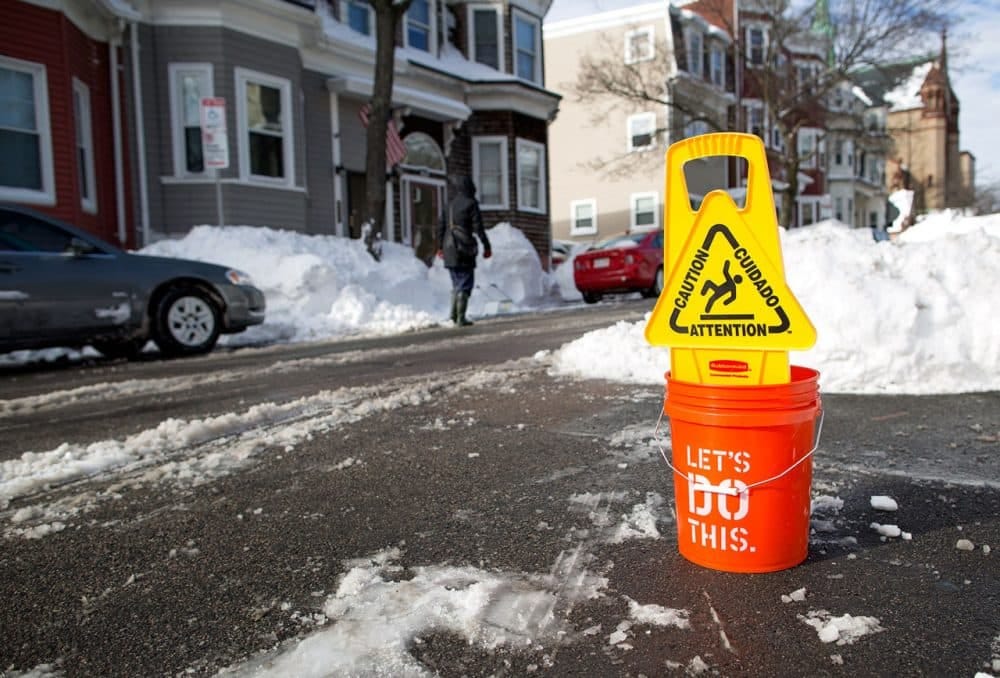
I’m not saying that that’s wrong, but I do think parking is a way of understanding how people experience that very challenging problem of owning a car in a city or in a dense area that doesn’t have a lot of other options. And I think that’s at the heart of it, is that parking absorbs all the ire of not having other options, and it absorbs that because we don’t have enough space for everyone who needs to store their car. People feel very stuck. They don’t feel like they really have an alternative. We have a lot of examples of what other places have done. We have a lot of examples now with technology solutions that could be put in place. And even in those situations, we are still very challenged about telling the story about why you should change your mind about this. It goes back to communication, that experience of hey, I bought this car. You told me I could park on the street in front of my building. That’s why I got it, and now you’re doing all these things that make it hard for me to do that. I think there’s a bigger swing that we can take. I don’t think there is a silver bullet, but that experience is really what we need to address head-on.
One can spend their whole career thinking about parking. It’s really interesting that you honed in on this, and I love the way you described it as like a retail problem because it affects car owners and non-car owners every day when you are searching for parking, paying for parking, or picking up a parked car, or if you’re in a non-car mode, let’s say you’re walking or biking, intersects with your ability to get around safely, quickly, visibly, legibly, with dignity.
All these things that affect everyone, whether you are a car owner or not, or whether you’re taking a particular trip by car or not. And it’s interesting to think about the lens of urban mechanics, if you will, through the eyes of parking. We lost one of our great scholars in the field, Don Shoup, last year, and he did, in fact, make a whole career out of parking and left a really, really long legacy for folks to glom on to, to use the data tools that we have and the technology that we have to deconflict the idea of parking versus not parking or how you can get around without a car.
It’s just these ideas of telling stories and communicating the true cost of what it takes to park. The challenge there is that that’s not how people think when they’re just trying to park. They’re not thinking about global climate issues or citywide parking, supply, and demand. They’re thinking about how to get their car in a safe, legal spot that they would like to pay nothing for out of pocket. How do you square the communications needs of citywide parking challenges or even land use challenges, versus the everyday experience of the average Boston resident?
I think that we could do a better job of understanding what it is that people are going through. And I would say it’s across the board. The people who live in the neighborhood that might have a car and the people who live in the neighborhood, who don’t have one, sometimes there’s a tendency to gloss over that. This is on my mind, too, because I’ve just been chatting with people about a couple of projects in our city. It’s interesting when you keep on asking, but why? Why does it bother you, or what’s really going on? One guy said to me, “I don’t like those bike lanes. They took away all the spots down the street. So now when my daughter comes to visit me late at night after her shift, she can’t park in front of my house, and I worry about her.” These are real things that people experience because maybe we don’t have that granular understanding.
I sometimes wonder if cities really understand how much parking there is, that is available to the residents in a neighborhood, both on street and off street, and thinking more creatively about the entire inventory that is available so that it can be more balanced. There has been, over the last fifteen years, like, “Oh, we should just put a parklet there,” or “We’re going to create some other great use,” which is absolutely the right thing to do.”
What are we doing for these other people who don’t have options or are trying to accommodate something else in their lives? If we can say to a neighborhood group, “You have 535 spots on the street right now, that is what it is,” or “You also have these garages. They have this much.” We need to find a way for this to work for everyone. I don’t think people necessarily hate this or that. I think that they don’t love the inconvenience to their lives, and yelling into a void makes it even harder to stomach when those changes come along. We should get creative, and maybe there are incentives and things that we can do to maximize whatever parking there might be, or the cars that are in the neighborhood. I don’t know if there’s a ton of that happening, to be honest.
There are so many angles, and there are so many different scales that we’re talking about here, which is why I make this such a thorny problem in my mind. It’s that story you told about the father and making sure that his daughter can get home or park in front of the home for whatever reason. There are so many things you can take away from that. The number one thing is that people’s experiences matter. People feel unheard a lot of the time. Even if the city or someone else decides on their behalf, they feel like they haven’t been heard. That’s the onus on the city and the folks making these decisions to make themselves heard. I keep going back to the story from Veronica Davis’s book, Inclusive Transportation, about how she used to hold meetings in the bus stop at seven o’clock in the morning before any decisions were made about the bus line or the bus, or change the layout of the bus stop, or any decision that the city would make. It’s hearing these stories and making sure the folks that we’re planning for, with and not at or to.
It’s making sure these folks are heard and doing that work up front and not doing what Roger Millar used to say don’t, “Design, Display, Deliver: Here’s your project. You’re going to like it.” I don’t necessarily think that planners should be spending a lot of time thinking about getting feedback on a proposed solution before getting feedback on understanding what the problem is that you’re trying to solve. We do so much of this heuristically, right?
We think we understand the problem because this is how it was in the past, or this is how they do it in this city and that city. And we take these things for granted in a lot of ways, because even if the problem is right, it hasn’t been designed by the community members. People feel that sense of loss and change more acutely in a situation where they haven’t been consulted about their street or their built environment. I’m curious if you have any thoughts about that or anything to add there.
I also don’t agree about over-litigating it. I don’t think constant intake is the right process. But I do think that the acknowledgement of experiences that don’t fall within the paradigm is messy. Human experience is messy.
I think that is important: getting creative about solutions, demonstrating effort about that initiative to accommodate the diversity of experiences, people get a lot of points for that. We tend to try to close down these kinds of conversations.
There are some policy changes that would make it easier, right? There’s probably some co-mingling of private and public parking that would make it easier for us to find a balance. All of this is in support of better bike lanes, parklets, and all those other things. But we must deal with this. We can’t keep on squeezing one segment without expecting a lot of pushback. I think we’re just getting started on how to finesse this, how to have this conversation, how to get creative about those solutions, and to also position technology as a tool to potentially manage it. But it’s not the end and be all; it’s alongside everything else.
One of the challenges is that land is finite...but Boston might be a different story. They’ve been dredging and filling in the Bay for hundreds of years at this point. However, the neighborhoods are set, and there’s limited space.
We must deal with that parameter. This is where good data science and technology, and machine learning, and being able to identify the inventory using data and understand, here is the number, helps. This is a finite number. Everyone can agree with this number or not; we’re relatively sure we’re correct, and that’s one side of the coin. The other side of the coin is learning what their experience is and asking, “Tell me the story of your commute.” And you go around and you do it for months, and you really spend the time canvassing the community, canvassing the neighborhood, talking to businesses about how they observe their customers, and talking to folks that live in a mixed use neighborhood or in a residential neighborhood, how their commuting patterns are different, or what their experience is like on an individual basis.
That’s the other side of the story, the qualitative side. From that, I think you’re armed with enough information to define your problem. It’s not about necessarily coming up with a solution just yet, even though we’re running up on serious problems that we can’t spend forever relitigating over and over and over again. But there’s a balance. I’m curious if your office or folks at the level that you interact with on a day-to-day or week-to-week basis, what’s the tenor and tone toward that approach in Boston right now, of taking time to think about problems methodically?
I like the way that you put it, that it’s about the data and the evidence, the quantitative side of things, as much as it is about the experience and perception.
We’re in this moment where there’s quite a lot of transformational initiatives underway that are exciting. One of them is around parking. Another is around permitting. We’re rethinking the entire zoning book because not all of Boston is in code. These are huge pieces of work that are going on that really require this approach. The problem definition, as you were saying, there are these different levels, right? There’s a very high level: all of Boston is not in code. Maybe we should look into it.
But then you keep on drilling down, chipping off one problem, getting closer to where to start. Is it the thing that needs to happen against these major transformations? That’s a lot of the work of this team, always putting into practice that impetus of problem definition. What are we really trying to solve? What would be different if we solved this? Sometimes it feels small, but it’s a piece of something much bigger. I’ve always felt like that was relatable. It makes it concrete. It creates a doorway for people to understand what you’re trying to do, even if ultimately, you’re going to be rewriting the zoning code that sits on screen somewhere that is applied by developers or builders. But you need a way in. You need a way to help people understand what exactly is going on and what the problem is.
And part of the messiness of city government is that you can’t wait for a perfect time. There’s no time to start right now. You just go do it. And that’s why you need the leadership of a singular mayor, but also the ability of that mayor to recognize surrounding herself with such incredible talent and letting them cook, giving them the tools to go do the job and saying, “I trust you have the right ideas to help the citizens of Boston and our visitors and our businesses and our future guests and the future of the city and our kids.” I know Boston’s a big university town. I went to BU fifteen years ago. I’ve seen Comm Ave become a great corridor that connects Boston going west by bike, by bus, and by train. It’s exciting to see these changes that are incremental, but they’re visible. Excit
We can dilly dally around ideas all we want, but at some point, we have to do something, and we’ve got to act. Certain things require longer-term thinking, right? You can’t build half a bridge. You can’t build a piece of a transit system. You need to build the whole thing eventually. You can do it incrementally, but you’ve got to have connections, right
You can create road diets and chicanes and mid-block crossings, all these different tools. We know the solutions available. But the real thinking comes in, what’s the order we do these things in? How long do they go up for? How do we elicit feedback that’s useful for us in a way that’s actionable as well? There’s the project pathway of problem definition. You gather your data, you turn it into information, create a narrative, go act, and collect feedback. But then the piece that is so often either missing or left off the end of a budget for reasons is, how do you communicate these successes?
How are you and your team and your partners across city government, with your public, private, and nonprofit partners, communicating your successes? What channels do you go through, and how do you know whether you’re getting the right feedback?
It’s something that we are constantly trying to work on and improve. Something lately that the team has been really focused on is bringing stories from people in Boston. Rather than it being a video of the head of [name your department], it’s someone who literally got to stay in her house because of a program that was created by the Mayor’s Office of Housing, or two friends who can finally buy something because of a co-purchasing program.
It’s those kinds of things that ultimately make it land; it’s not the face of government in a way. It works well for the people it’s trying to serve. Having people essentially give testimonials of what exactly was going on in their lives and what this program did to help them is really persuasive. Something that the mayor has been doing, which I hear about from people who don’t live in Boston and people who are not in this space whatsoever, is her “commute with me” videos. She’ll meet someone, and she’ll commute to wherever they’re going, whether it’s a job or school, or whatever. What I love about that, and someone on my team also made this observation, is that this is not a conversation like, “Look, they could do this, and we should get this better…” That is not the conversation. The conversation is being present in a space with someone else and just seeing what they experience. It’s really moving.
I’m sure the production of that is more complicated than I’m going to simplify it here, but it really is that easy. It’s that easy to just show up, number one. And number two, connect with someone. Really talk to them about what their issue is without an agenda. It’s hard to do because you’re taught to have an angle, you’re taught to…
…to pitch.
Yeah, exactly. To have some sort of deliverable, and with this, the deliverable is the video, but there’s no report. There’s no findings pathway that must then sync up with four other departments. And I think that lets the city breathe a little bit. It brings attention to the strategy, “Let’s talk to someone in Jamaica Plain today. Let’s go out to Charlestown or out west to Allston or Brighton, in that area, and let’s highlight the values of these different parts of the city and give people some neighborhood pride.”
And then we’ll also talk about transportation a little bit. But we’ll let the commuter talk to me, right? This is not me coming in with, Gotta fix the 66 bus. Gotta fix the 57. That’s not useful. That’s too far on the solutions. Let’s just talk about, tell me about your commute.
I do this in my public engagement as well. It’s really that easy. You just ask and be genuine about it. Ask someone, “How are you experiencing your city today?” People are very excited. They’re experts in their own space. It’s free data. Basically, they’re going to tell you something you’ll never be able to figure out on your own. It’s incredible.
Yeah. It’s very rich. People have a lot to share, and it’s a privilege, honestly, to be able to go on that journey with them. There’s just a lot of opportunity there.
We’ve intermingled the “what can you do better right now?” portion of this. Let’s get into the planner’s dream of what a successful future looks like to you personally and then to your team, if they’re different or the goals are not necessarily similarly scaled.
The future I think about isn’t so far off. I’m not thinking 2050, I’m thinking 2030, which has always been a big target year for climate issues. In many ways, I think people for the big solution sets in the climate space feel like we’re behind, right? Like, we’re just not hitting these carbon reduction targets. We get hampered by politics and this and that.
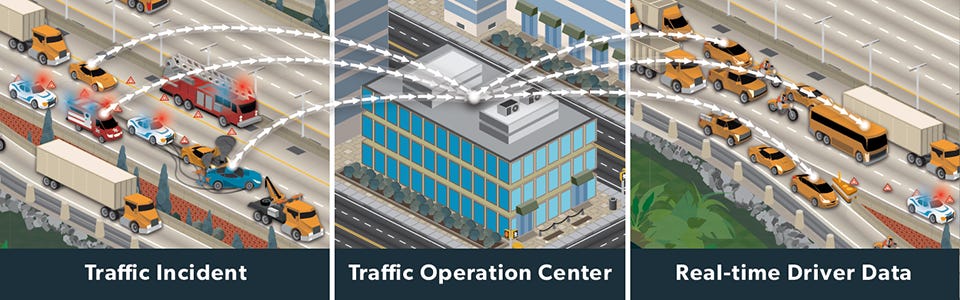
But on the other hand, the next several years are where we’ve seen technological solutions in the last few years get really proven out. Solar panels are cheap; we know how to do microgrids. We can redistribute electricity. The future I envision is one that is very people-first and has those accommodations down to the detailed level. But it also makes use of every technology that makes sense and really helps. And I don’t think of it as being just utopian, only walkability or only walking or biking, but that we are making use of all of these different innovations, whether they’re technology-driven or not, even AI.
I also imagine a time, hopefully soon, when maybe we could shed some of the things that don’t work. There are a lot of policies that cities have that were created once upon a time and calcified into a practice. “That’s just how we do things,” kind of thinking, and we can let go of some of this stuff. Boston has a lot of it. It’s one of the oldest cities in the country, so there’s a lot of funny and funky policies coming from its origins, but I would love to see some loosening around, let’s say, commercial buildings.
Does it need to be so prescriptive? Is there more flexibility we can build into how we think about our built form? Can we encourage people to try things out because we don’t know what our downtowns are going to look like? There should be a few tries, two to three years of, “Is that a viable business?” Think about pop-ups beyond the ground floor, right? Pop-ups in the bigger, taller buildings because there’s a lot of commercial vacancy right now across the country. You can just go on and on. I would love to see an interrogation of the process by which this was created to do this thing. Does it achieve its goal? Does it cost us more to do this? Are there other ways we can achieve that goal? And there are a lot of intersections here with things that are untouchable, like worker protections. Very important. But not letting go of any of those ideas? What are other ways we can ensure that we have those protections? Because we’re in a different economy now, an entirely different kind of economy. I would love to see some of those things happen and see it manifest in our public spaces so that it is more integrated. Boston is a minority-majority city now, but you don’t necessarily feel that. We have a long way to go. We’re dealing with all these climate crises. We have a long way to go in terms of showing how that climate infrastructure should be along the coastline, like our harbor. There’s just a lot that could be built up and done.
Not to distill the great nuance you just used, but it sounds like where we’re heading toward: here is land use and zoning reform. And that does consider transportation as well, because I would love to remind my audience that roads are a land use. It’s how we’ve decided to split the land by building these lanes, whether they’re wide, narrow, or somewhere in between. And allow more things by right. Let’s think about performance zoning rather than exclusionary zoning. Let’s allow the market, whatever one means by that, let’s allow folks with ideas, either government or not, to reflect the needs of the people and the density people want.
We can still have a gradient of density in our cities because I think we want to have that legibility of where downtowns are and have certain guidelines. But the metaphor that I use is: four line segments can still make a square, depending on how you put them together. Let’s have more design freedom and allow things by right. And if they don’t work, then they don’t work. But we’re stuck on this old way of doing things because right now, folks understand the zoning code, whether it’s arcane or not. They understand what it means, what you can’t do, right? This is what you have to do here. Here’s how the process works. Are we trading our ease of process for a vision of the future that reflects the people who choose to live in a place like Boston or New York, or one of our other growing cities, or one of our smaller towns, one of the thirty thousand or so places in this country that have their own quality of life, but also a zoning code.
I think what’s ironic about what you just said is that I don’t know if the process today is easy. But there’s comfort in knowing and doing what you know. If we can trust that the next leap will take us somewhere good and that there are things that we don’t even know will happen, that’s going to be pretty cool.
We’re learning how to manage a little bit better with new technology, with our better communications techniques, and we’re understanding these risks at a deeper level for climate risk and human risk, interaction risk, and all these different areas where we’re trying to measure these things.
Our team is new, so I appreciate the opportunity to share some early thoughts about it and get feedback. Hopefully, all of this will be put to use!