


NEXT Up: Where We Are
Last week (or so), I wrote about reassessing what a successful Mamdanistration could look like. My takeaway was (and is) to frame success differently, to understand that with this historic win, there is an opportunity to yank the trajectory of New York City from the jaws of capital. Somewhat. The agenda will likely stay focused on affordability for as long as it’s possible. Barring a force majeure, this could be four plus four more years of investment in the working-class outcomes of all New Yorkers and the people who want to call it home. The agenda is ambitious, but as I’d mentioned, even if the dedicated people who’ll fight for it for the foreseeable future can only get some of this agenda done, we’ll hopefully have achieved two meaningful structural goals:
We’ll have entwined and intertwined policy, block-level politics, and participatory democracy into knots that capital interests will have to conspicuously spend to untie.
This piece is challenging. It requires base-building and remaking City Hall to de-silo the built environment both horizontally (Chief Public Realm Officer to start; smashing Land Use and Transportation together to finish) and vertically (Community Board advisory, endowing Borough Presidents with more decision-making, forcing City Councilors to work together and more closely with City Hall and with local block associations)1.
We’ll have made meaningful change—if not total reform—in the driving down the everyday cost of living and envisioning a future in New York for lifelong residents and hopeful ones.
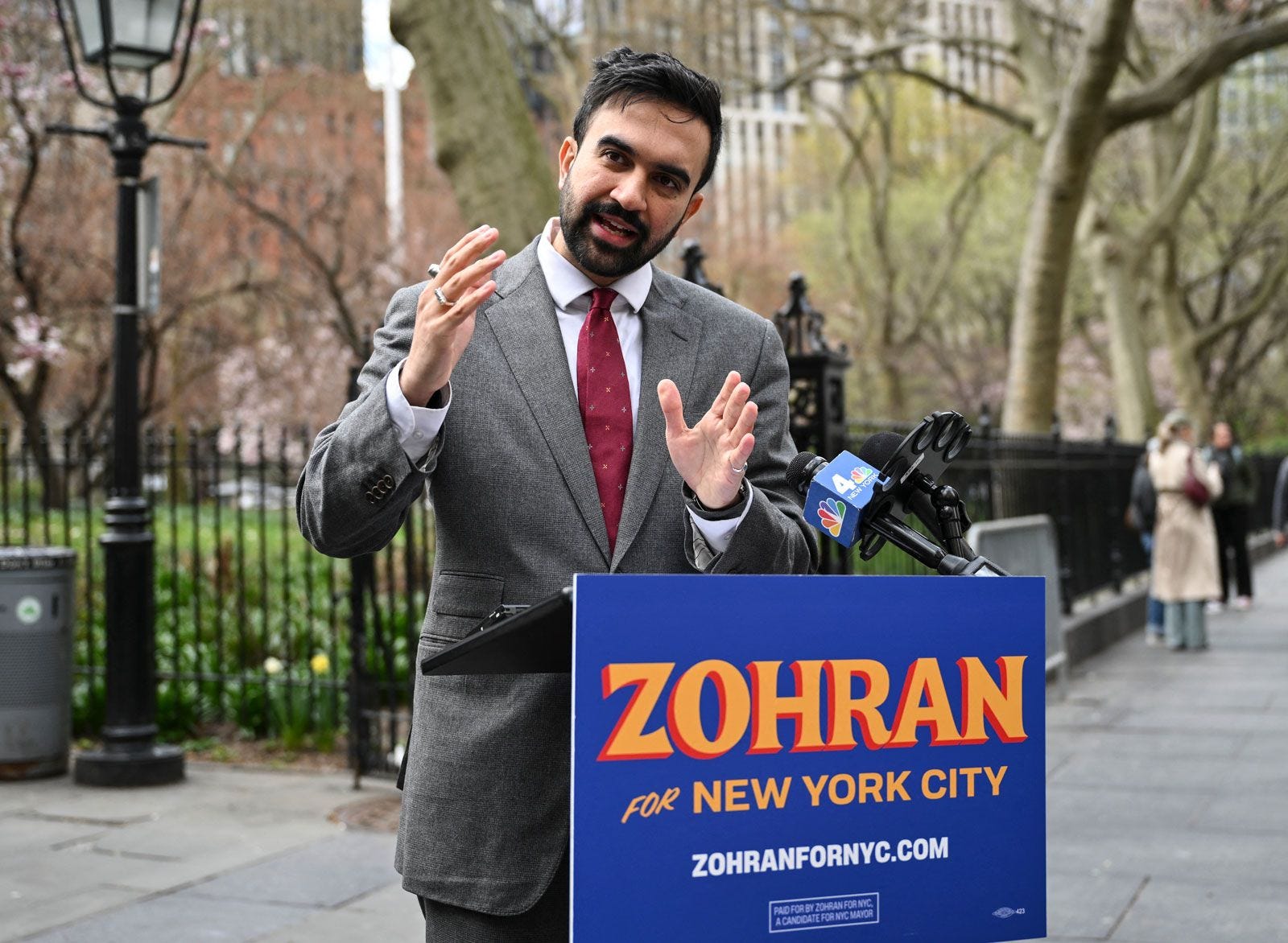
If this seems easy, then well, you’re right. It is easy…to envision. Mayor-elect Mamdani ran on this and sold it to people who have been forgotten and forlorn. Let’s start with where we were and are.
And after this, I’ll dive into specific policy areas.
…et al, Bloomberg, De Blasio, Adams, Mamdani
Mayor Mamdani will be the 111th Mayor of New York and will be compelled to craft an agenda that maintains the basic infrastructure of running New York and pushes his affordability programs. I would be remiss here to not discuss the platforms of Mamdani’s immediate predecessors.2,3
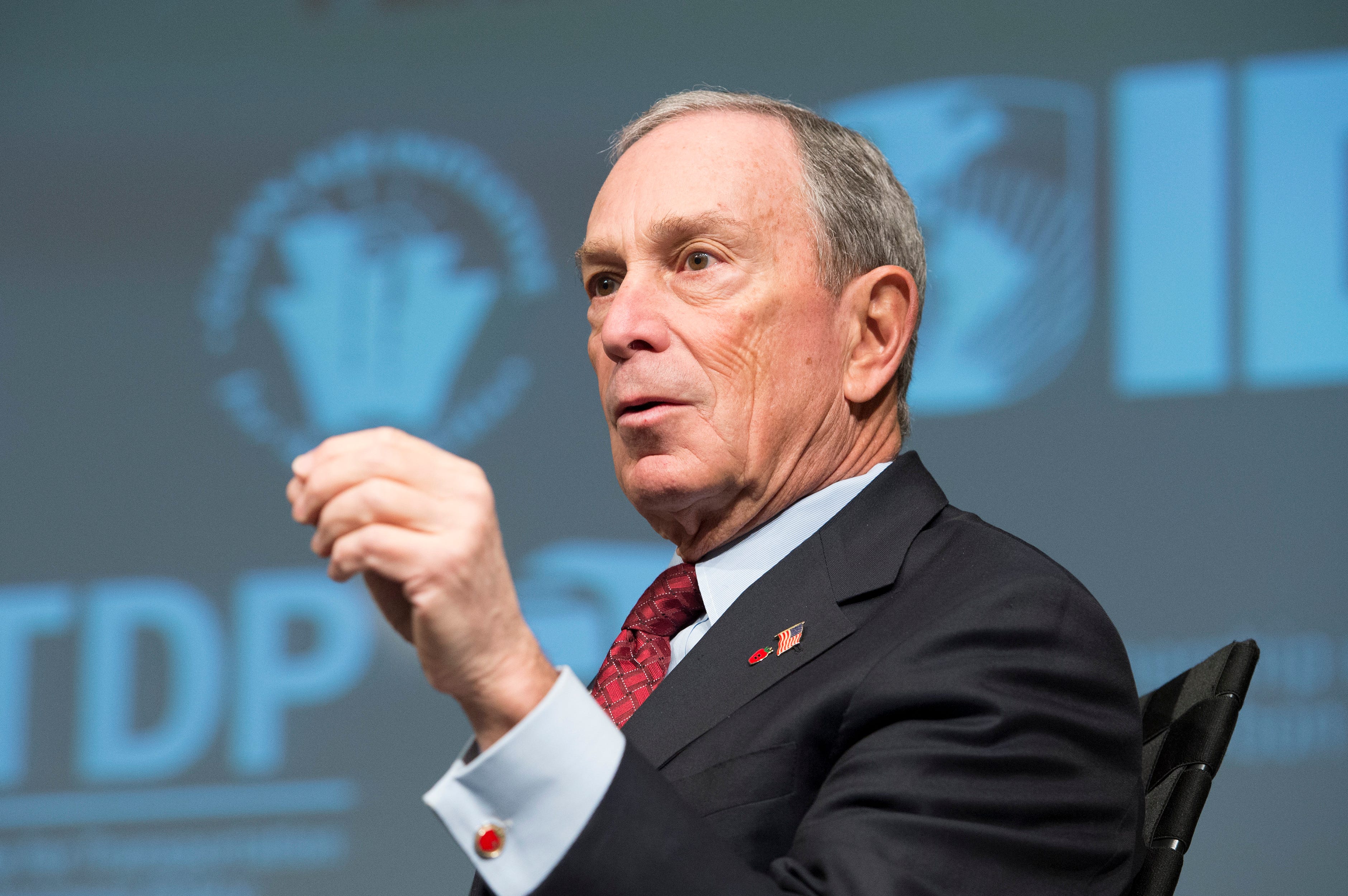
Michael Bloomberg (2002, $40 billion → 2013, $60 billion):
“Mainly a Success”: Stop-and-frisk-and-growth over 12 years, 12 years ago. What if you took Croesus and made him in charge of rebuilding New York post-9/11? Like what if you, the one person, could pay for the whole of a year’s budget yourself? Who are you accountable to?
It’s amazing that we forget that you could openly smoke cigarettes in restaurants until 2002.4 Mayor Bloomberg also brought the City’s schools into city government—from an independent board—and implemented a data-driven approach to testing….and the establishment of a charter school regime and a spillover of stop-and-frisk into the classroom. Mayor Bloomberg also led a zoning revolution (though, sadly, not abolition) and sprung major development. It’s taking too long. Zohran can trace the rezoning from Mayor Bloomberg and amplify it just so loudly.
Verdict: The lesson here is that while technocracy leads to agnostically optimized solutions, data-driven investing leaves open wide blind spots. Stop-and-frisk is the best and most visible example of this: data say that “resources” should be “deployed” to “communities” that have had, historically, “crime.” The theory is that in these neighborhoods, preemptive policing can “reduce” “crime”—proving the claim that crime needs to be reduced. The problem, the big fu*kin problem, is that communities of color disproportionately are tagged and targeted and scapegoated. So, at the expense of tenuous trust5 from concentric circles of communities that share really one trait—skin color—the city gets to say it’s tackling crime. It’s racist, it’s ineffective, and it paints people as a manifestation of statistics. Just in case you’re curious where I stand.
Anyway: the lesson is that Zohran can and should de-silo his executive branch and use data-driven policymaking where it intersects with equitable action. People first.
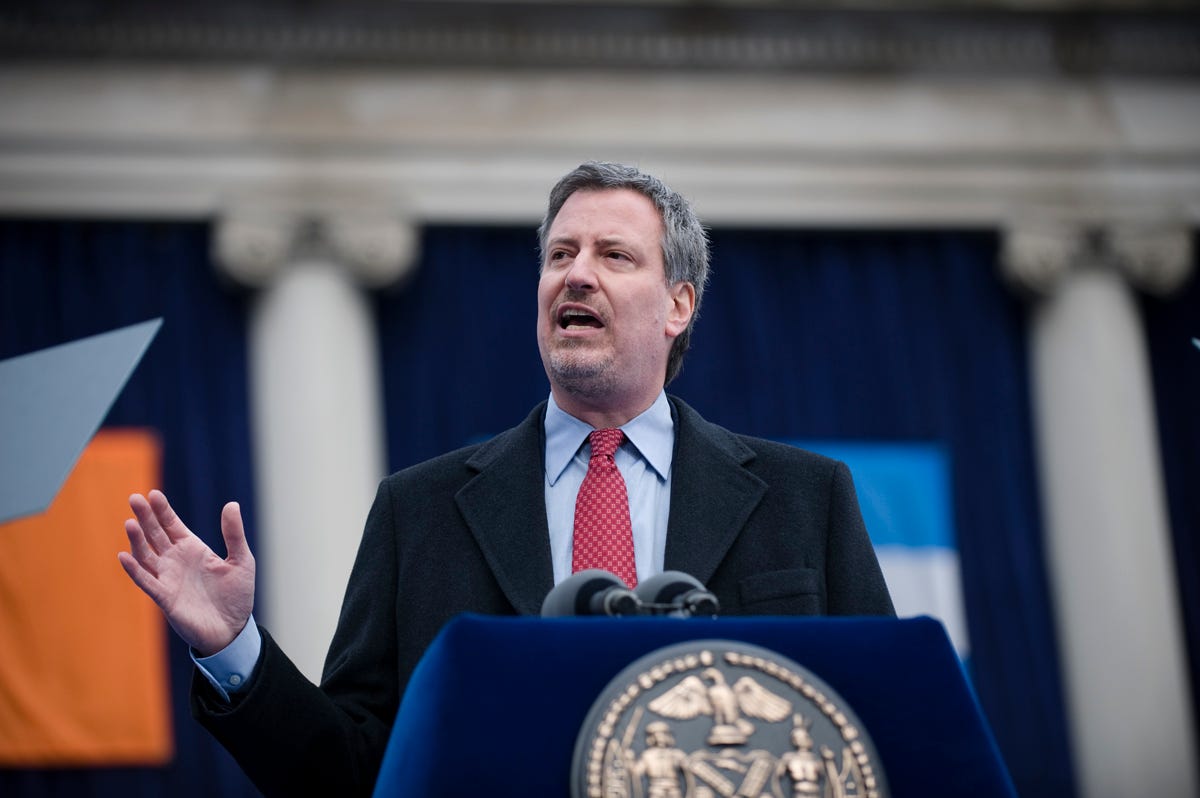
Bill de Blasio (2014, $72 billion → 2021, $100 billion!):
“A Tale of Two Cities”: A smorgasbord of reform and political ineptitude. Ended Bloomberg’s “stop-and-frisk” program, expanded universal Pre-K, implemented Thrive NYC to help New Yorkers manage the mental health challenges that have come out of left, center and right field, and urged City Council to lead on environmental stewardship by passing a Green New Deal. Mayor de Blasio saw the city as a place for those who “have” and those who…don’t—referencing Dickens’ book of the same name. While a vibrant image, income inequality, and wealth disparity continue to plague the City’s checkerboard development, it’s easy to trace a path to Zohran from this kernel.
Verdict: This man is the definition of a broken clock being correct twice a day, except for this guy. The man is truly ambitious and progressive New York stalled behind the inability to broker power and somehow managing to piss everyone off, all while kneecapping his own staff with the Ankh of Indecision that he continues to gesticulate. De Blasio will be remembered more for his what-ifs than for his what-dids; he’s a good man who did some silly things. No Federal indictments, though some truly incomprehensible runs for higher office.
Zohran will be good to lean on the good parts of de Blasio’s progressivism, which includes a tack toward the political center, where helpful. He could certainly avoid getting into a nasty fight with the Police/Sergeants’ Benevolent Association right away and ride that tide all the way to…
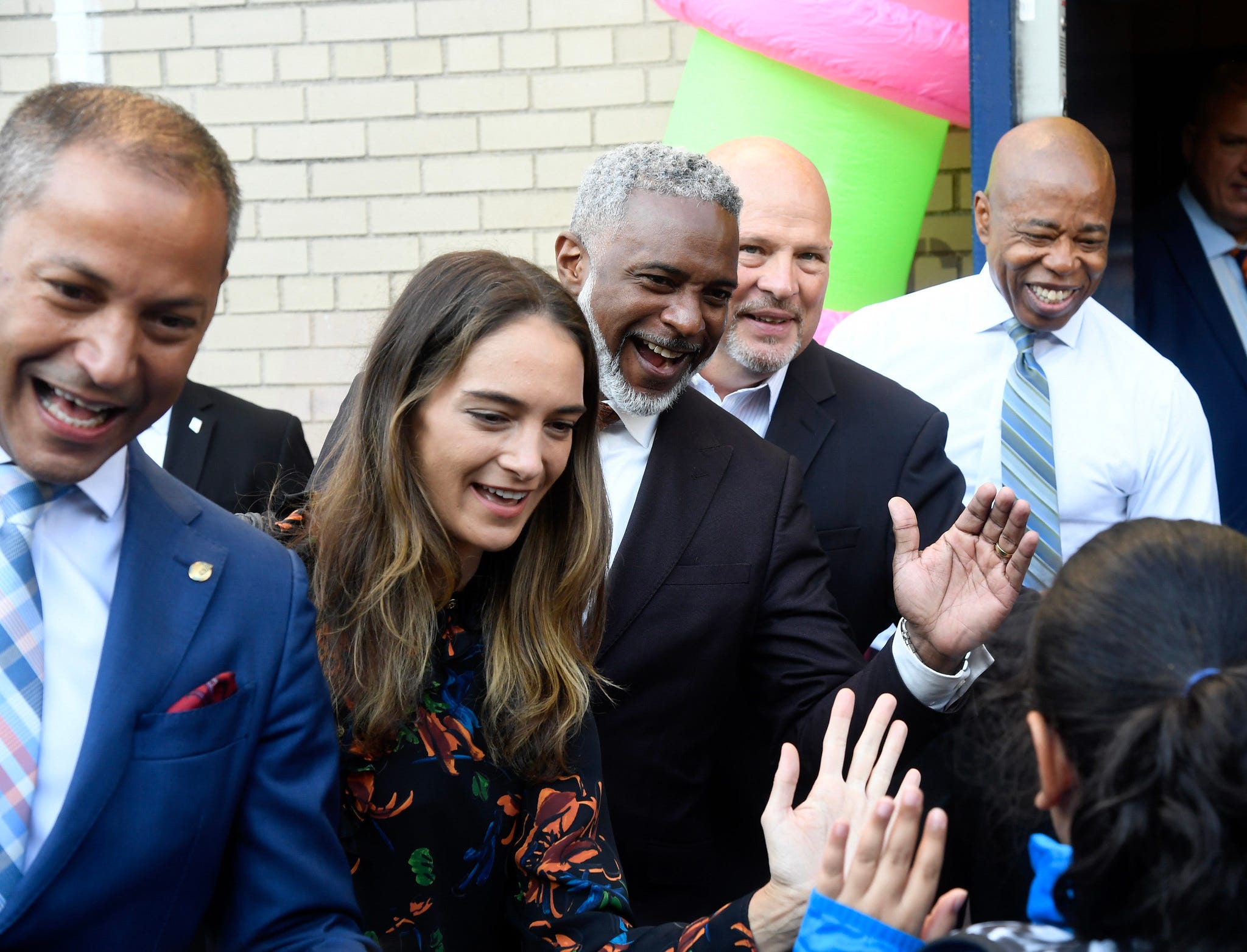
Eric Adams (2022, $105 billion → 2025, $116 billion):
“Getting Stuff Done”: Well, he certainly did. We’ve got “City of Yes” to reform zoning and development, and just simply build more housing, the slow, but effective? start of trash containerization, extension of universal 3K, crime? reduction?. He also got indicted in Federal Court and had a swirl of controversy that followed him and will likely follow him once he leaves office on December 31, 2025—
Verdict: Lots to build on here, including inculcating a City of Yes attitude for the affordability agenda in new City staff and advisors. Overall, Eric Adams was a pretty mediocre Mayor who did a bunch of good things, often outweighed by public missteps for 4 years. He’ll be remembered fondly for his good works and likely derided forever because of the many questionable decisions and missed opportunities.
The $120+ billion NYC Budget
The rubber meets the slow road at spending priorities, which are explored and executed through The Budget.6 Let’s start here:
There is a number—a very large number7—that level-sets where the revenue comes from and where and how the city spends it. Simple? Nope.
Beyond the obvious pitfalls that a budget does not on its face equal a bill of sale and it’s not like the revenue sources are stable and the expenses totally accounted for on July 1, which is why it’s not called The Invoice/Receipt. There are fluctuations, uncollected dollars, and changing needs that don’t follow a Gregorian calendar or fiscal8 year. There’s bloat and waste and there’s a balance among needs with the understanding that all else equal $1 can pay for $1 worth of stuff. It is also essential to understand that the Financial Emergency Act of 1975 legally requires NYC to balance its budget.9
Here are two graphs that explain the current budget:
Spending
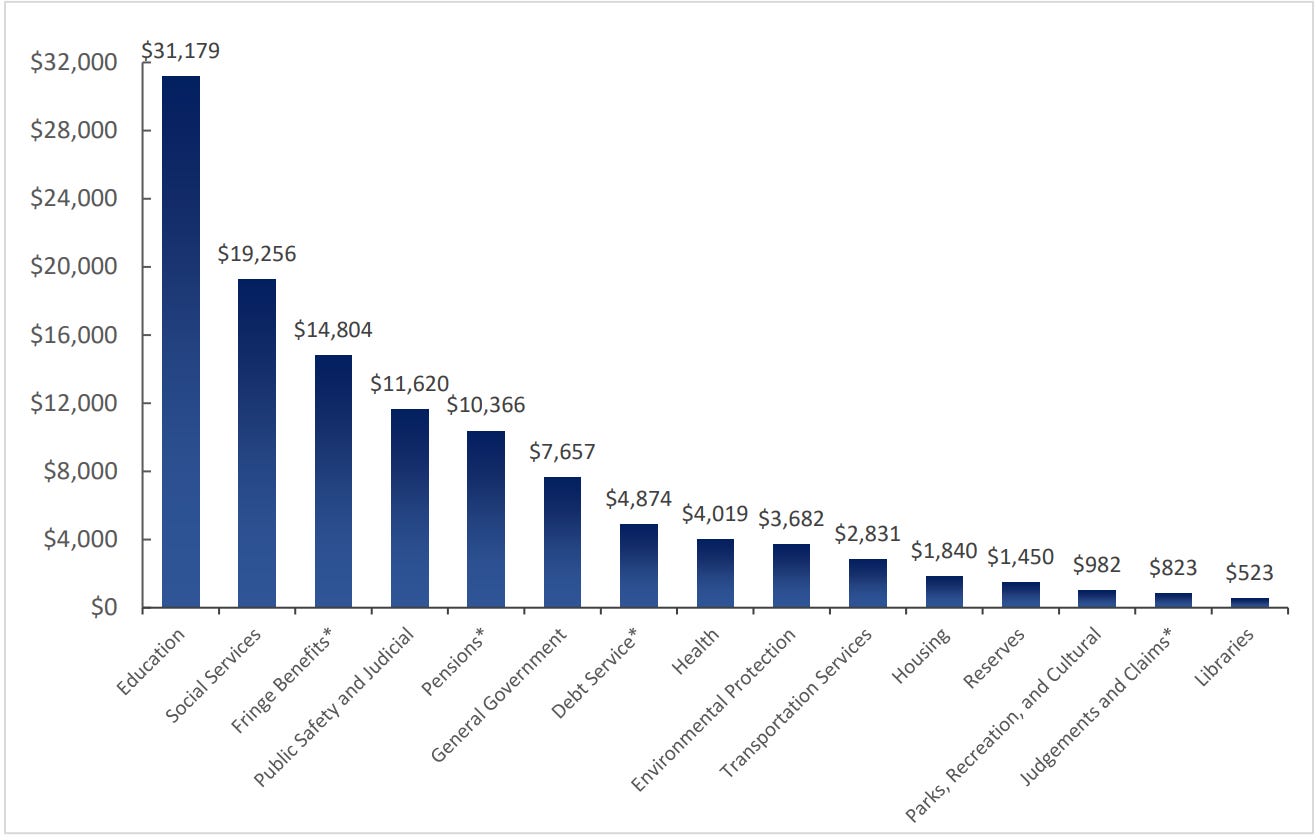
A few important points about the above graph from the Comptroller’s office. The reason it took me so long to write this is that this chart sucks.
These numbers do add to $116 billion—there’s a whole bunch of “other” wrapped up inside these categories that were organized for space. But the office making these choices says something, and be careful about how you read the data. “Parks, Recreation, and Cultural” are spend buckets but not a single department.
It’s sad how little — less than .5% of the total budget— libararies get each year.
What are “social services?” What’s “housing?”10
Revenue
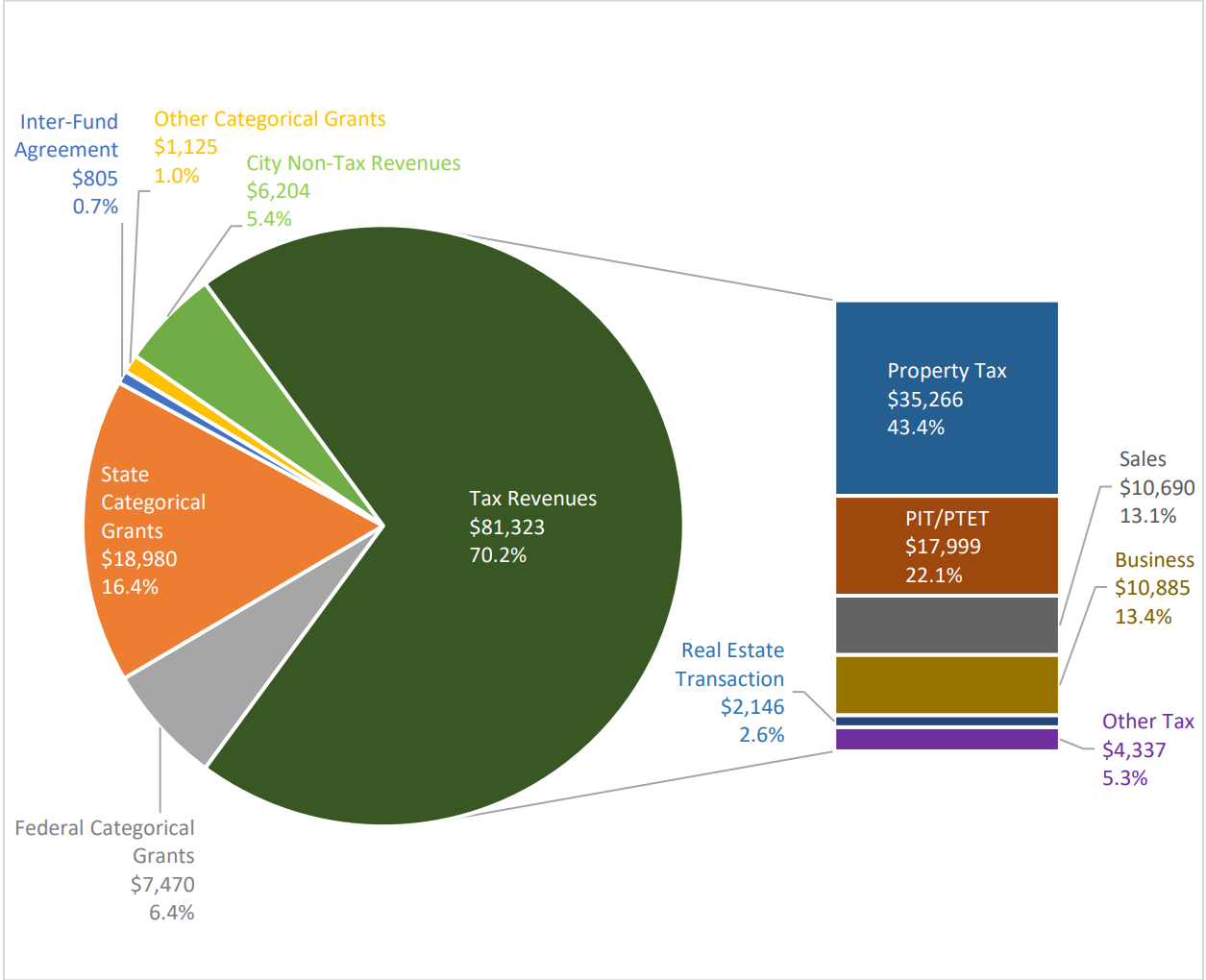
A few points about this pie chart of revenue sources.11
Over 70% of our revenue comes from tax dollars. This feels relatively healthy—not too reliant on the kindness of our federal overlords (both State and Federal)—but it’s also a relatively obvious cause for concern and susceptible to shocks…
…but not as much as that pesky Federal Categorical Grants categories, which our President12 may withhold, legally or not, should he rub the brain cells together in a certain way on a certain day.
We should be ready for austerity and a decrease in the amount of money we have to spend starting in July 2026—on operations and maintenance expenses.13
I want to take a look at a few pieces of the expenses portion as examples of what the City prioritizes, knowing that there’s an inherent tradeoff among incompatible policies and that the process of negotiating these tradeoffs reflect our collective values and ability to compromise. There will be winners and losers. I’m hopeful a Mamdanistration is at least transparent about the choices it makes and why it shifts policies and priorities without sacrificing the goal of affordability.
He’s going to piss people off. And that’s okay.
Okay, so real talk here. One of the reasons it is so hard to track $115.91 billion14 is the many ways we can divide spending for analysis.15 It’s easy to look at the spend and the ongoing project’s they’re supposed to pay for—including the ongoing livelihoods of several dozen thousand people who dedicate their lives to the gnawing promise of a better built environment. It’s easy to simplify the revenues to their component cash injections and cash balances, and outstanding debts, and the accompanying debt service.
Mayor Mamdani has to keep the lights on and maybe screw the bulbs in a little tighter, while also figuring out how to wriggle new spending into his policy provisions. Ironically, in order to achieve an affordable New York for everyday New Yorkers, the administration is going to have to spend more. In political parlance, invest. And he wants to do it with rich people’s money, which historically has not been popular with rich people. The rest of us—the everyday New Yorkers looking to make dinner for our families and maybe experience a little joy with the premiums we pay to live here—the rest of us want this type of reshuffle.
I implore the incoming Mayor to do a few things first and foremost:
Publicly inventory as best as possible where the money is coming from and where it’s going. Work closely with allies and bring opponents into the fold with smart compromise. Cut out bad actors decisively, starting with loyalist political appointees from previous administrations.
Convene ongoing working groups to discuss priorities below the departmental level. Coalesce, as best as possible, around the principles that will drive the FY27 budget. Understand which horses are tradeable and which ones are landmines. The transition committees should be permanent, overly transparent, and revolvable.
Use current spending and tax powers to shuffle inputs and outputs—and tell us about it. Do not lose the power of public perception because of any fear of reprisal. Remember that you ran on the party line “Big Mad” and challenge opponents head-on, and that you’re simply a better organizer than naysayers and sycophants, and capitalists. Remember where the landmines are and set your own. We must fight.
Do the easy stuff16 slowly and pick up the medium stuff17 all at once. Flood the zone with benevolent action. Finish the promises defined in LL195 from 2019 to build the bus lanes and bike lanes, and do a rethink of what you want the next streets plans should look like. Direct your staff to make it happen, and use the power of the executive to get it done; devolve decision-making to the borough presidents as needed to make sure the shitstool of leadpipe isn’t too clogged.
Free buses?
For next time.
I’m not going to get too deep into this for now. Just know that diffusing power is the most powerful act the executive can do to make sure that successors can’t simply CTRL+Z the changes. For as good as President Obama was at organizing a floundering center-right into thinking it was a left, he failed to marshal this feeling into the statehouses and local councils. Huge L. Obviously, Mayor-elect Mamdani isn’t the President (and can’t ever be, which is good for NYC), but he has the chance to remake the executive as he and his team see fit.
I’m starting at Bloomberg because 90s New York was a completely different place, not that Giuliani was an actual human? and not a lizardperson [sic] back then.
Format: Mayor Name (Starting Year, City Budget in nominal → Ending Year, City Budget in nominal $$$). This is a key point to understand that $1 in 2002 != $1 in 2026. For example, the 2002 ~$40 billion budget would pay for ~$73 billion of stuff in 2025. Consequently, ~$115 billion in 2025 dollars would have bought only ~$62 billion worth of stuff in 2002. This is why it is essential to compare dollars to like dollars: it would seem that the budget has bloated by 3x since 2002—in nominal dollars—but in reality, it’s only increased about 1.5x. More on this, never.
Good for public health, but probably the death of cool in New York.
It was, and mostly continues to be nonexistent.
The Independent Budget Office is a charter-authorized, independent agency tied to the City’s Office of Management and Budget (OMB) that interprets the City’s budget and its effects. It’s nonpartisan and arms length from policy making or dollars allocation. It will be a good place to keep an eye on the budget as the Mayor works with the City Council to pass the FY2027 Budget, which will be enacted on July 1, 2026. This is the start of the fiscal year; it’s offset from the calendar year by 6 months.
The NYC annual budget, and get this, is over $110 billion. Humans can’t understand how large this number is because there’s no way to see this amount of money in real life. Another way to imagine this is through heuristics. Let’s say we were to spend $1,000 every second. It would take our government about 30 hours to spend $110 million (nice work if you can get it), but 3.5 years to spend $110 billion. This number is, shockingly, 1000x bigger.
There’s something incredibly goofy and stupid about imagining a Gregorian fiscal year.
More fun footnotes! There is a difference between the capital budget and the expense budget. The City is allowed to borrow (via municipal bonds) to build larger capital projects that exceed available current dollars, but not to pay for operating expenses. The City doesn’t have to balance a daily or even monthly cash account, but ultimately must make sure that the accounts are level.
Indeed.
Never, ever use pie charts. That’s the takeaway from this.
I had so many other words I wanted to use here, but this isn’t “get disappeared” day for Sam.
You think we can game the system at all by reclassifying some operating expenses as capital and bonding their revenues? Any lawyers want to tell me why this idea is correctly stupid?
It’s funny that $0.01 billion is still $10 million.
There’s expenditure by year, by department, by “topic”, by project, expected vs. actual. You (I) can track trends and patterns. You can discount future spending by how risky you think revenues might be to collect as they expand or contract, etc.
Daylighting around intersections is easy. Literally fill the potholes. Take a Strong Towns approach in the strongest town.
Bike lanes—protected bike lanes—fix the parking regime (ha) and tell us all about it. Try medium stuff and fight more.