


The Surface Transportation and Uniform Relocation Assistance Act of 1987 (STURAA) was landmark legislation for a few reasons, not least of which is that it finally, finally, got us to cool acronyms.1 This bill also couriered Federal spending from Interstate Highway spending only to more multimodal spending, toward what it looks like today, albeit not yet and very slowly.
PRE-STURAA:
Since 1916, the Federal government still subsidizes state and local spending on transportation and infrastructure projects. The key changes to Federal spending in the 110 years since the aptly-named Federal Aid Road Act of 1916*2 …are the point of these next nine posts, so buckle in. We’ll examine them through the lenses proposed in the previous post.
Power: How does power influence how, where, and what projects are favored? How has this changed over time?
Mode: What’s the focus of this bill? How can we tell what the focus is? How should we talk about this? Is it still highways?
Complexity: How complex does this bill expect our system to be? Are we set up to handle the dispersion of money?
Flexibility: How can money be used? Does the language allocate spending to specific programs or functions? How much is formula vs discretionary?
Geography: Where’s the focus of the investment? More spread out? Need or merit?
A fun fact, because these posts are all only fun forever, is that because of this bill, each state, if it hadn’t had one already, created some vessel to collect and administer these Federal dollars.3
ANYWAY. Here’s some analysis I’ve been sitting on for months because I didn’t know how to share it.
Power: Local >> State >> Federal >> Regional. In the beginning, the power—and the knowledge—was dispersed at the local level. Roads were built and maintained by some checkerboard of public and private builders and were sometimes paved and continuous and sometimes not. The locals used their state as a Constitutionally-driven passthrough for much of this work, until MPOs were created in the 60s. Spoiler alert! MPOs become much more prominent later.
Mode: The first bills from the early 1910s focused mainly on highway and road building. The first transit bill came 8 years after the landmark highways bill, in 1964. This program established a dedicated, albeit smaller, funding source for mass transit. It established both formula and discretionary funding sources, including the Capital Investment Grants program (CIG) that still exists to day. Many transit bills are included in overall transportation reauthorization and often are not passed standalone (instead, omnibus) because of the direct tie to the highway trust fund (HTF) authorization. This is what makes the 1964 bill so special.
Complexity: Increasing level of complexity that continues and will need to continue, starting with the exponential ramp up of maintenance funding for highways -- the IHS had been built and will continue to be built going forward through the late 1980s and early 1990s but that’s rolling disrepear that continues today because we never and continue to not account for the maintenance. Transit (especially trains) is a different beast. More moving pieces; assets that can be sold or rehabbed off-site or replaced by newer technology. There is a real challenge with maintaining a transit system and railroad network that simply doesn’t exist in road building. If only cars weren’t so damn inefficient.
Flexibility: Continues to change. The Highway Trust Fund -- the major source of ALL transportation funding not specifically authorized from the general fund -- was created and endowed in 1956; the mass transit account came in 1982. Because of the dissasociative nature of spending in general the Congress and USDOT have created over 100 different discretionary programs to fund all sorts of projects that don’t fit into the narrative of older laws; lots of different authorizations are carry-forwards and amendments to older ones. There have been attempts to reform the HTF funding sources over the years; only a few before STURAA, but the main source of funding, the federal gasoline tax remains free-based around a 1993 level of a gas tax. There’s no appetite to increase it as of 2024.
Geography: Earmarks made it much more obvious which projects would get funded from which districts/states. Remember the “geography” here needs to be parsed and thought of in so many different ways: there’s vertical and horizontal federalism; one relies on the stack of gov’ts that track funding through a usually impenetrable tube of tumble. The other is how nicely locals, regions, and states play with each other. There was a moritorium on earmarks in the 2010s but they’ve since been eased back in. There’s a good balance of earmark versus competitive blind-spend that makes it more or less useful for politicking and logrolling. How much ~corruption~ is acceptable to fund the better part of our system?
STURAA:
“The Surface Transportation and Uniform Relocation and Assistance Act”
Fast forward 71 years and 33 bills and we’re at the Named Bills.
Power: State >> Federal >> Local >> Regional. The dynamic has shifted. State DOTs are responsible for STIPs and systemwide maintenance (good!) and capcity (read: highway) expansion (not good!) and in some instances, like New Jersey, New York, Connecticut, and Massachusetts, transit investment and operations. The Feds still cover a majority of these costs by tapping into the Highway Trust Fund and other appropriated dollars, but it still feels like local and regional work gets lost in the mix.
Mode: The focus of this bill is still highways. There’s a greater attention detail for the 4Rs—resurfacing, restoration, rehabilitation, and reconstruction including a set aside for discretionary funding for high-need projects in urban areas. The Federal Mass Transit Act made some changes to CIG and nothing particularly important here.
Complexity: STURAA expects transit to be at least equally complex to highway spending. This lack of distinction, which continues the STAA funding from 1982 but continues a marked changed in spending authority and authorization from older bills pre-1982, when mass transit funding switched to contract authority vis-a-vis the highway trust fund rather than general appropriations from the general fund.
Flexibility: STURAA continues earmarks but makes subtle changes to the idea of spending. Added a 4th “R” to maintenance spending.
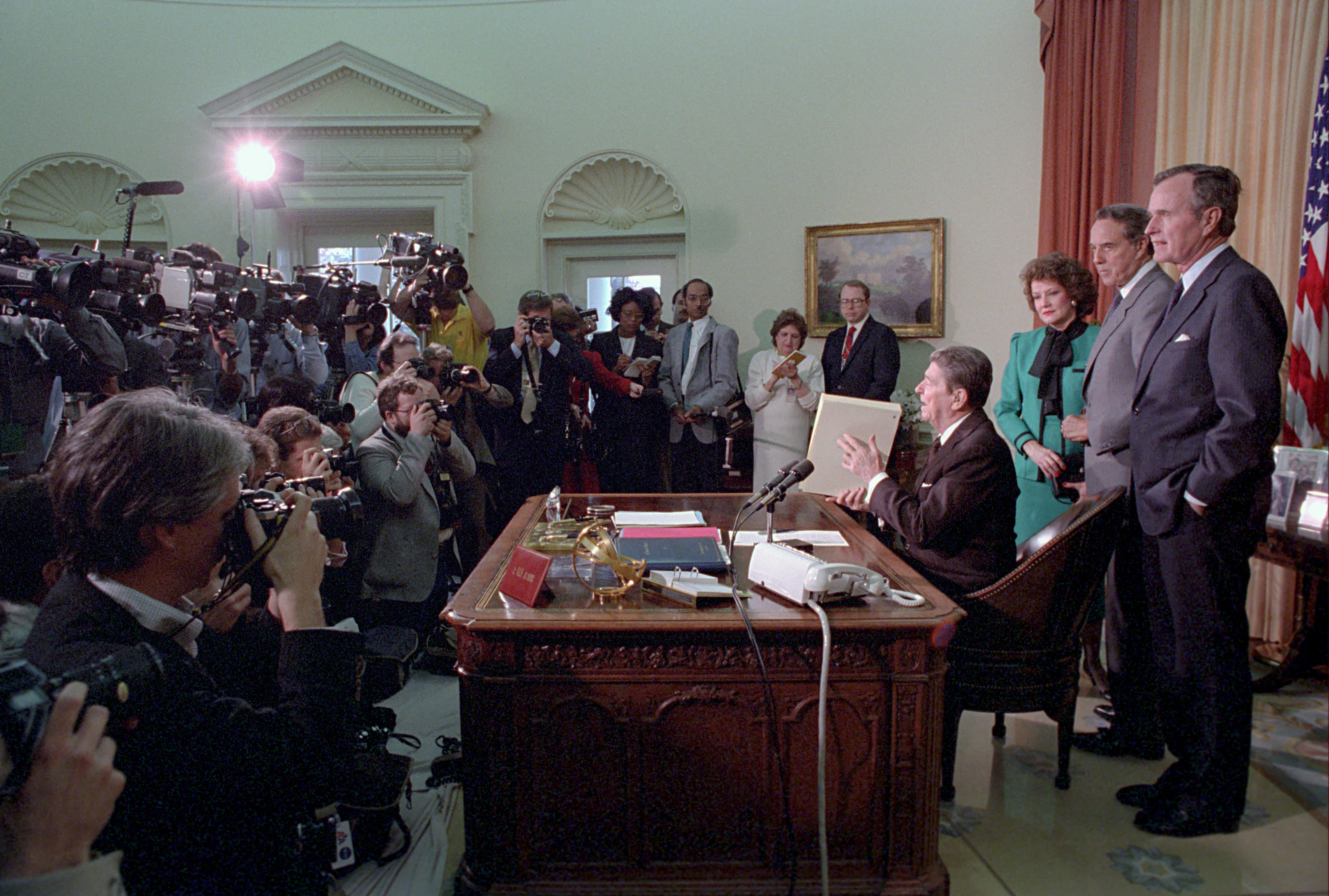
Geography: Lots of earmarks here and “demonstration projects” that ultimately led to President Reagan vetoing the Bill before Congress overrode him. A death knell to the Presidents skinny agenda, this veto override also indirectly destroyed public housing in the US.4 Pork/earmarks survived 2010/2011 and then again in 2021. The interesting thing to look out for is how this type of spending shapes national narrative.
Before STURAA (cool) we only had Federal-Aid Highway Acts, which, aided Federal Highways almost exclusively. The nomenclature matters and helps to tell not only a memorable story but also conveys major policy initiatives in a few syllables. Its one of the few corny upgrades that make complete sense.
FARA?
One question I wanted to ask was how was this money sent to states before the current, somewhat disasterous, accounting system we use today. Did the state highway department administrator submit receipts to recoup state dollars in arrears (like they do today) or was cash sent in an envelope to the highways fellas?
TIN FOIL HAT ALERT. FHWA released a short post-mortem on how this bill eventually passed muster for President Reagan’s signagure, here. Worth the 3 minute read…but how did this veto kill public housing in the US. North Carolina Senator Terry Sanford (D-NC) was ultimately the deciding vote to override the veto—whipped by Senate Majority Leader Robert Byrd (D-WV) against state party wishes. Fast forward to the 1992 election, when Senator Sanford lost the primary, mainly on the back of this vote 5 years earlier, to…
…Lauch Faircloth (R-NC), who sponsored an amendment to the Housing Act of 1937 to cap the number of publicly-owned, Federally-funded housing units across the country at a hard limit. This effectively locks the Federal government out of entering a particular market with a public option to meet local housing needs. STURAA, whyyyyyyyy.
Excited for the rest of this series!