


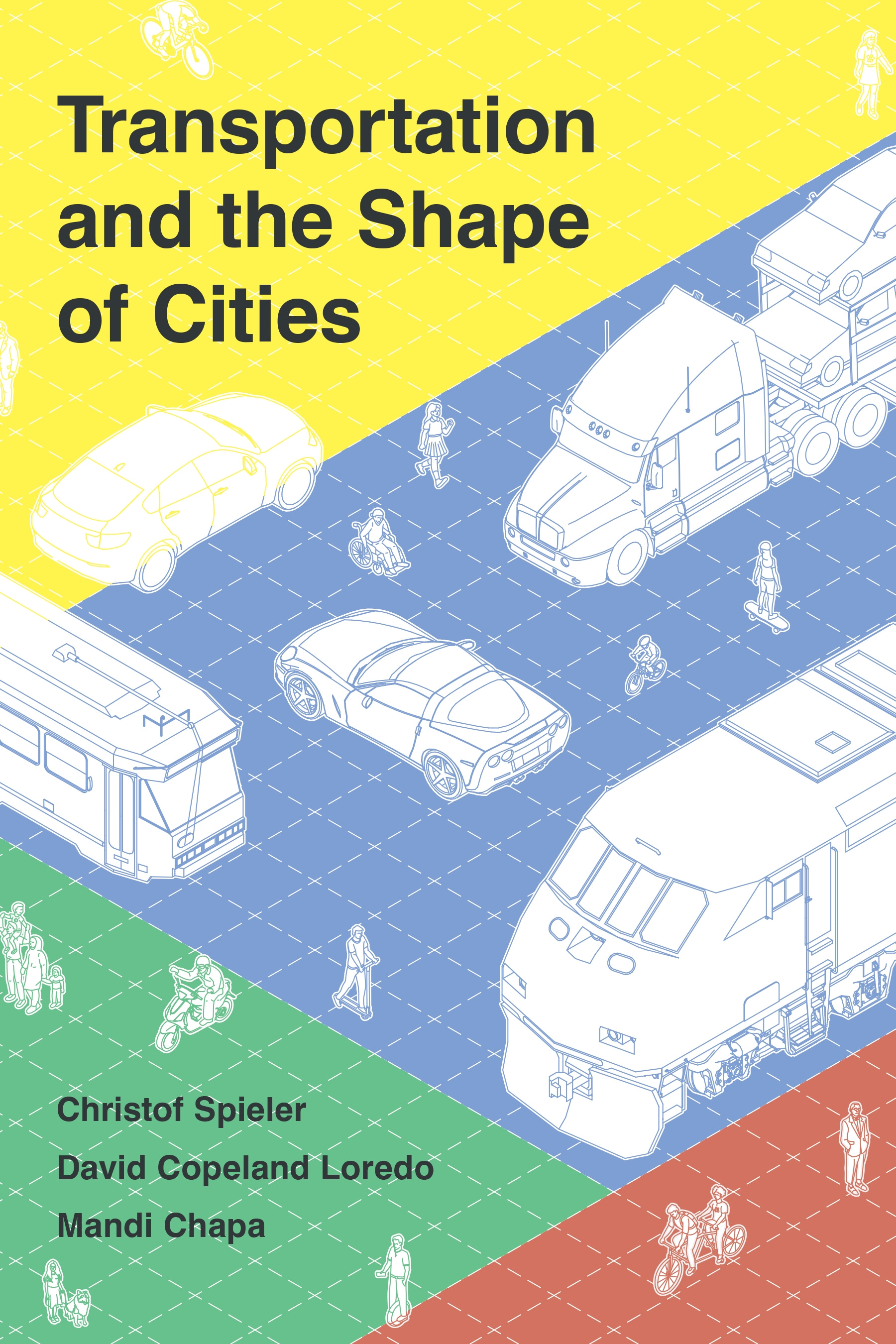
I have had the pleasure of being in Christof Spieler’s orbit for a few years. He released his first book, Trains, Buses, People: An Opinionated Atlas of US Transit, in 2018, followed by a Second Edition—expanding to Canadian transit in 2021. This year he’s joined forces with two titanic collaborators, David Copeland Loredo and Mandi Chapa, to release Transportation and the Shape of Cities, which consolidates, somehow, decades of experience onto your bookshelf. The work is so seminal, they’ve even built a course around it, and I plan on using it to teach when I get around to it.
Here’s what I’m asking of you if you’ve made it this far:
Listen or watch the conversation. There are incredible takeaways in there.
Geometry is destiny; treat it as fact, not advocacy. Every mode of transportation has fixed spatial requirements that no amount of policy or intent can override. Cars will never be as space-efficient as pedestrians; trains struggle with grade separation; these are unavoidable facts. The book’s power is that it lays out these constraints neutrally, so decision-makers can make informed trade-offs rather than wish away reality. This depoliticizes infrastructure conversations by centering what’s physically possible.
Standardization scales impact far more than heroics. You can build one amazing bike lane with talented designers and political will, but you’ll never create a great bikeable city that way. Real change requires the AASHTO Green Book equivalent for every mode: routinized standards and guidelines that let your average planner, engineer, and department produce good facilities consistently. Standardization is how you go from exceptional projects to systemic change at scale.
The book democratizes technical knowledge so communities can negotiate rather than defer. Christof’s core insight: traditional planning meetings end when someone lists seventy things they want. The real conversation, the hard part, is figuring out what actually fits in the available space and prioritizing trade-offs. By giving elected officials, community members, and cross-disciplinary teams enough spatial literacy to have informed opinions, the book puts power in their hands instead of handing everything to engineers in a “black box.” It’s infrastructure literacy as civic infrastructure.


